
An ectopic (extrauterine) pregnancy is when a fertilized egg implants outside the uterus, in a location that cannot support its growth. If an egg remains unusually positioned, it will not develop into a baby and the mother's health may be at risk if the pregnancy continues.
There are high risks that can lead to a medical emergency, so an ectopic pregnancy must be treated quickly. We tell you everything you need to know in this article.
What is an ectopic pregnancy?
A normal pregnancy is one that forms and develops inside the uterus (intrauterine), after the fertilization of the egg in the fallopian tube. Then, it migrates to the uterus, where it will implant within 5-6 days of fertilization and will lead to pregnancy. Once this is formed, the entire reproductive system changes its behavior, one of the first signals being the absence of menstruation.
What happens in the case of an ectopic pregnancy? The fertilized egg does not reach the uterus and is positioned differently, a situation that can have serious consequences. The complications of an ectopic pregnancy can endanger the health and even the life of the mother.
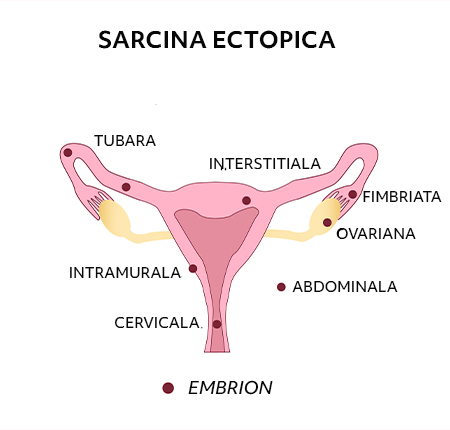
There are several types of ectopic pregnancy, depending on where it forms. Thus, an ectopic pregnancy can occur:
- in a fallopian tube (tubal pregnancy) - in 90% of cases;
- at the level of an ovary;
- at the level of the cervix (cervical pregnancy);
- in the abdominal cavity.
DID YOU KNOW? Ectopic pregnancies occur in approximately 2% of all pregnancies.
Ectopic Pregnancy - Symptoms & Signs
The initial symptoms of an ectopic pregnancy can be very similar to the typical symptoms of a normal pregnancy. We have a separate blog post where we tell you all about the first signs of pregnancy . You may not even notice any symptoms at first, and if you take a pregnancy test it will come out positive. However, an ectopic pregnancy cannot continue normally. 
If you do have symptoms, they tend to develop between the 4th and 12th weeks of pregnancy. They may include a combination of:
- pain in the pelvic area - often, the pain can be concentrated on only one side of the pelvis, the one where the pregnancy was formed;
- pain in the lumbar spine;
- abdominal pain;
- vaginal bleeding or a brown watery discharge;
- discomfort when going to the toilet.
In the event of a tubal pregnancy, there is a risk of a rupture in the tube, and the symptoms that may occur are more violent:
- sudden, intense pain in the pelvic or abdominal area;
- shoulder pain - in the case of heavy bleeding, the abdominal and pelvic cavities are flooded with blood;
- peritonitis (swelling of the abdominal area);
- hypotension;
- dizziness and even loss of consciousness, due to the loss of a large amount of blood.
Any of the manifestations that could indicate rupture of an ectopic pregnancy requires emergency medical attention, as they can endanger the patient's life.
How does an ectopic pregnancy occur?
To understand how an ectopic pregnancy occurs, it is first essential to know that the connection between the ovaries and the uterus is made through the fallopian tubes. When the fertilized egg needs to reach the uterus, it will pass through the fallopian tubes.
In an ectopic pregnancy, the embryo that forms after fertilization of the egg usually gets stuck in the fallopian tube and doesn't make it to the uterus for implantation. It implants outside the uterus or in an unusual, scarred part of the uterus, and a baby doesn't develop.
Instead, unusual symptoms will appear in the first trimester of pregnancy and health problems will develop if the pregnancy continues. If you want to compare the symptoms of an ectopic pregnancy with those of a normal one, we explained HERE more about how pregnancy typically develops by week in each trimester.
At how many weeks is an ectopic pregnancy detected?
Ectopic pregnancy is usually discovered early in pregnancy. Doctors usually diagnose ectopic pregnancies in the first trimester (up to 12 weeks of pregnancy). However, most people discover they have an ectopic pregnancy around eight weeks into pregnancy.
The gestational age at which an ectopic pregnancy is most commonly confirmed is between 6 and 10 weeks. Symptoms usually appear from the fourth week, or 6-8 weeks after the last normal menstrual period. You can use a pregnancy calculator to estimate how many weeks pregnant you are.
There are also women who do not notice any unusual symptoms in early pregnancy. In their case, they may not know they have an ectopic pregnancy until the first ultrasound when the doctor makes the diagnosis, or until more serious symptoms begin to appear as the pregnancy progresses without the fetus developing.
Just like a normal pregnancy, an ectopic pregnancy is detected by pregnancy tests that measure HCG levels, or by beta HCG analysis in the laboratory. I told you HERE how and when you realize you are pregnant.
The level of the HCG hormone has a slower rate of increase in ectopic pregnancy and therefore the first measured values may be lower, which can lead to a false negative result. Laboratory tests, on the other hand, can identify the presence of the HCG hormone even in the case of ectopic pregnancy much earlier. I told you everything about what other analyzes are done during pregnancy HERE .
Do you get your period during an ectopic pregnancy?
Whether or not you get your period during an ectopic pregnancy is a dilemma for many women, and it's normal. Especially knowing that if your periods continue to come uninterrupted, you're usually missing an important clue and it becomes much more difficult to realize that you're pregnant. So, let's talk:
Heavy vaginal bleeding is a sign of an ectopic pregnancy, but it should not be confused with your period. Although an ectopic pregnancy can be asymptomatic at first, menstruation is usually absent even in the case of an ectopic pregnancy. So no, you most likely will not get your period.
But as I said, there can be heavy bleeding during pregnancy that can easily be confused with your period. So the signs to look out for are the color and texture. Ectopic pregnancy bleeding is either watery and lighter, or heavier and darker than regular menstrual bleeding.
When should you go to the doctor?
If you experience sudden, severe pain associated with vaginal bleeding, seek medical attention immediately. However, if you experience a combination of the above symptoms, you should speak to a doctor to determine your situation.
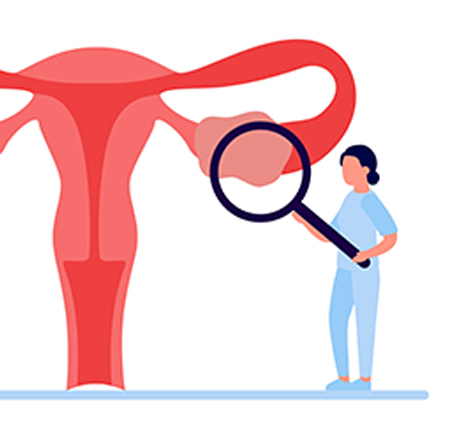
With the postponement of the visit, complications will also arise and the risk of death will increase. It is important to know that a timely medical check-up can prevent the occurrence of complications.
Ectopic pregnancy - Causes
There are several possible causes that lead to the occurrence of an ectopic pregnancy. These include:
- pre-existing inflammation of the fallopian tube
- congenital malformations of the fallopian tubes
- long-term use of the IUD
- hormonal imbalances
- abnormal development of the fertilized egg
- absence of an ovary
- endometriosis (endometrial-like tissue fragments are present outside the uterus)
- pelvic inflammatory disease (PID) - inflammation of the female reproductive system, usually caused by a sexually transmitted infection (STI)
- previous ectopic pregnancy – the risk of having another ectopic pregnancy is about 10%
- fertility treatment, such as IVF – taking medication to stimulate ovulation (the release of an egg) can increase the risk of ectopic pregnancy
- smoking
- advanced age – the risk is highest for pregnant women over 35 years of age
Risk factors - Ectopic pregnancy
Additionally, some patients are more likely to have an ectopic pregnancy due to risk factors. These include existing conditions, medical history, and bad habits, such as:
- history of ectopic pregnancy
- previous induced abortion
- fallopian tube surgeries
- pelvic surgeries
- the presence of an IUD in the uterus
- smoking
- age over 35 years
- pelvic inflammatory disease
- appendicitis
- infections (Chlamydia trachomatis)
- sexually transmitted diseases
Ectopic pregnancies are not always caused by the presence of risk factors. Approximately half of women with ectopic pregnancies do not have any risk factors.
Complications of ectopic pregnancy
The reason why it is so important for ectopic pregnancy to be detected, diagnosed, and treated in a timely manner is that serious complications can occur.
An ectopic pregnancy cannot be carried to term, does not support the baby's development, and is impossible for the fetus to survive. What this type of pregnancy does instead is endanger the health and even the life of the mother.
Because it is not a normal pregnancy that implants in the uterus, it can damage the fallopian tubes and cause heavy bleeding or serious infections. Below are the most common complications of ectopic pregnancy.
Internal bleeding
According to statistics, most ectopic pregnancies occur in a fallopian tube – this is the case for over 90% of ectopic pregnancies. Thus, as the pregnancy progresses, its growth can cause the tube to rupture and automatically cause very serious internal bleeding in the abdomen.
This can happen anytime between 6 and 16 weeks, and the blood loss is greater the later the rupture occurs. Internal bleeding can even be life-threatening. Of course, the more severe the bleeding, the greater the risk of death. Emergency surgery is needed to stop it.
Damage to the fallopian tubes
If not detected in time and appropriate measures are not taken, ectopic pregnancy can cause serious health problems due to damage to the fallopian tubes. The main complications that occur are salpingitis (inflammation of the fallopian tubes) or even rupture of the fallopian tubes.
Complications can include sudden, sharp stomach pain, heavy bleeding, dizziness, fainting, pale appearance, and increased pulse. In severe cases, a ruptured fallopian tube can even be life-threatening.
Tubal rupture due to an ectopic pregnancy requires emergency treatment. This involves surgical removal of the pregnancy remnants. Depending on the severity, the ruptured fallopian tube may also be removed, or a repair procedure may be performed.
Diagnosis - Ectopic pregnancy
It is often difficult to diagnose an ectopic pregnancy from symptoms alone, as they can be similar to other conditions. If you have symptoms of an ectopic pregnancy and a positive pregnancy test, you may be referred to an early pregnancy assessment service for further testing.
These tests include:
- vaginal ultrasound - for a close-up view of the reproductive system;
- blood tests - to measure the pregnancy hormone, hCG levels tend to be lower and increase more slowly over time than in a normal pregnancy;
- Laparoscopic surgery - for direct examination of the uterus and fallopian tubes.
Can an ectopic pregnancy be seen on an ultrasound?
If pregnancy is confirmed, an ultrasound is performed. This is a non-invasive and non-radiating method that allows determining the location of the embryo. The doctor may also decide to perform a Doppler ultrasound. This increases the chances of detecting an ectopic pregnancy.
Does the pregnancy test detect ectopic pregnancy?
Since an ectopic pregnancy is very similar to an intrauterine pregnancy at first, a classic pregnancy test will only tell you whether you are pregnant or not. The time when you are most likely to get a conclusive result for a pregnancy test is from the first week of your missed period. The urine test commonly used to identify a pregnancy is based on detecting the level of HCG (human chorionic gonadotropin), the hormone produced in the body when there is a pregnancy. Keep in mind, however, that pregnancy tests can also indicate false results, whether negative or positive. You can read in our article the reasons why you can get a false positive pregnancy test.
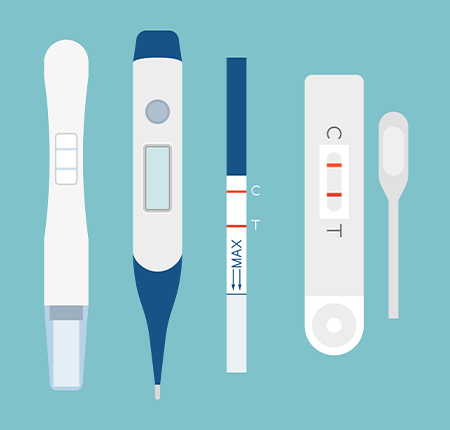
What you need to know is that a pregnancy test will not distinguish between a normal pregnancy and an ectopic one, regardless of whether the HCG measurement is done in urine or blood. Such a pregnancy is usually detected only after the onset of symptoms or even after it ruptures.
More interesting information about what pregnancy tests are, how they are done, and how they work can be found in our article All About Pregnancy Tests.
Ectopic pregnancy - Treatment
Unfortunately, the fetus (the developing embryo) cannot be saved in an ectopic pregnancy. Treatment is usually needed to remove the pregnancy before it becomes too large.
The main treatment options are:
- expectant management – your condition is carefully monitored to see if treatment is necessary;
- medication – a medication is used to stop the growth of the pregnancy;
- Surgery – surgery is used to remove the pregnancy, usually along with the affected fallopian tube.
Expectant treatment
If you have no symptoms or mild symptoms and the pregnancy is very small or cannot be found, you may only need to be monitored closely, as there is a good chance that the pregnancy will dissolve on its own.
Called expectant management, the process works something like this:
- You will have periodic blood tests to check if the level of hCG in your blood is decreasing - you will do these until the hormone is no longer found.
- Additional treatment is administered if the hormone level does not decrease or increases.
- Usually, you will have some vaginal bleeding.
- You may have stomach pain.
- You will be told what to do if you develop more severe symptoms.
The main advantage of monitoring this way is that you won't experience any side effects from the treatment. One disadvantage is that there is still a small risk that one of your fallopian tubes will break off (rupture), and you may eventually need treatment.
Drug treatment
If an ectopic pregnancy is diagnosed early but active monitoring is not adequate, drug treatment may be recommended. This works by stopping the growth of the pregnancy and is given as a single injection into the buttock.
You will not need to stay in hospital after treatment, but regular blood tests will be done to check that the treatment is working. Sometimes a second dose is needed, and surgery may be needed if it does not work.
Ectopic pregnancy surgery
In most cases, laparoscopic surgery will be performed to remove the pregnancy before it becomes too large.
During a laparoscopy:
- you are given general anesthesia, so you sleep while it is performed;
- small cuts (incisions) are made in the belly;
- a thin viewing tube (laparoscope) and small surgical instruments are inserted through the incisions;
- the entire fallopian tube containing the pregnancy is removed if the other tube appears healthy – otherwise, removal of the pregnancy may be attempted without removing the entire tube.
Removing the affected fallopian tube is the most effective treatment and does not reduce the chances of getting pregnant again. Most women can leave the hospital a few days after surgery, although it can take 4 to 6 weeks to fully recover.
If your fallopian tubes have already ruptured, you will need emergency surgery. The surgeon will make a larger incision in your belly to stop the bleeding and repair your fallopian tubes, if possible.
Psychological counseling
For any woman, recovering from an ectopic pregnancy is not easy, and psycho-emotional health will also need time to recover, just like physical health. Losing a pregnancy brings with it an emotional imbalance, which requires special care, so if you feel the need, you can turn to family, friends and, last but not least, a psychotherapist or psychiatrist who could help you.
Can an ectopic pregnancy be eliminated on its own?
In a few cases, an ectopic pregnancy can be eliminated on its own, but then the expectant treatment we talked about earlier is applied.
Can you still get pregnant after an ectopic pregnancy?
You may want to try for another baby when you and your partner feel physically and emotionally ready. Is it possible after an ectopic pregnancy?
Your doctor will likely advise you to wait until you have had at least 2 periods after treatment before trying again to allow yourself time to recover. Most women who have had an ectopic pregnancy will be able to get pregnant again, even if they have had a fallopian tube removed. Occasionally, fertility treatment, such as IVF, may be needed.
The chances of having another ectopic pregnancy are higher if you've had one before, but the risk is still small. If you do become pregnant again, it's a good idea to let your doctor know as soon as possible so that early scans can be carried out to check that everything is okay.
Recovery after ectopic pregnancy
Typically, a woman can resume normal activities within about a week of laparoscopic surgery to remove an ectopic pregnancy.
During the recovery period, it is normal to experience abdominal pain, which is why it is recommended to continue taking the painkillers prescribed by your doctor. It is also very important to maintain close contact with your doctor, so that you can communicate any problems you encounter.
Diet is another important factor that contributes to a quick and trouble-free recovery. Eat light foods such as toast, chicken soup, vegetables, and fruits with anti-inflammatory properties. You may also experience vaginal bleeding for 1 to 4 weeks after surgery.
Prevention - Ectopic pregnancy
Although no prevention method completely eliminates the possibility of an ectopic pregnancy, there are still a number of measures you can take to minimize the likelihood of such a medical problem:
- prevention of sexually transmitted diseases, which involves limiting sexual partners, using a condom during every sexual contact that is not intended to conceive;
- quitting smoking before getting pregnant;
- having regular check-ups with a gynecologist to monitor the health of the reproductive system.
Menstruation after ectopic pregnancy
Menstruation after an ectopic pregnancy is not much different from normal menstruation. What may surprise you, however, is the vaginal discharge that occurs immediately after the surgical intervention to remove the pregnancy.

And since your health is the most important thing, choose to use ENROUSH sanitary pads made from 100% organic cotton, without traces of chemicals, perfumes, chlorine or plastic. Hypoallergenic and approved by gynecologists, Enroush's organic cotton sanitary pads do not cause irritation or allergies, do not unbalance the pH of the intimate area and give you the safety you need.
Discover Enroush pads HERE and take your menstrual care to the next level, for you and your health.

In case of ectopic pregnancy, do you get your period?
Since ectopic pregnancy does not initially differ in symptoms from intrauterine pregnancy, your period will stop once you become pregnant. You can check if you are pregnant with a pregnancy test.
Sex life after ectopic pregnancy
Depending on your experience, your sex life after an ectopic pregnancy may or may not change. Like any major, traumatic event, recovery will also depend a lot on your psyche. So, once you feel ready to restart your sex life, do it at your own pace, embracing even the difficult moments at the beginning that are part of the process. If you have a normal pregnancy, we have prepared another article that we invite you to read to find out everything you need to know about sex during pregnancy .
We do, however, have a few great tips for a healthy sex life:
- limit the number of sexual partners
- use a condom - it also protects you against unwanted pregnancy and many sexually transmitted diseases
Frequently asked questions
If we haven't answered all your questions yet, maybe we can now.
When is an ectopic pregnancy visible on ultrasound?
By 12 weeks of pregnancy, the doctor can tell whether or not it is ectopic. Most often, an ultrasound is performed to determine this.
When do you realize you have an ectopic pregnancy?
The symptoms of an intrauterine pregnancy are not much different from those of an ectopic pregnancy. Our advice is to go to the doctor regularly to identify early if there is a problem and pay attention to the signals your body sends you.
What is the beta hcg value in ectopic pregnancy?
In normal pregnancy, serum beta-HCG levels double every 48-72 hours until they reach 10,000-20,000 mIU/mL. In ectopic pregnancy, serum beta-HCG levels increase less, so that values are lower than in normal pregnancy.
A single value is not diagnostic for ectopic pregnancy. Careful analysis by a doctor is required.
How long does an ectopic pregnancy last?
Usually, in the first months of pregnancy, a doctor identifies whether it is intrauterine or ectopic. Since only the uterus can support and develop a baby, an ectopic pregnancy will not survive and will be removed through surgery or medical treatment.
Why is an ectopic pregnancy dangerous?
Ectopic pregnancy, which in over 90% of cases implants in the fallopian tubes, does not allow the fetus to develop and survive. The baby cannot be nourished and cannot grow outside the uterus. On the other hand, the growth of the pregnancy can lead to serious complications such as rupture of the fallopian tubes and severe internal bleeding, which can even endanger the mother's life.
Sources used:
- NIH, "Risk factors and clinical characteristics associated with a ruptured ectopic pregnancy": https://www.ncbi.nlm.nih.gov/pmc/articles/PMC9276220/
- NIH, “Ectopic Pregnancy”: https://www.ncbi.nlm.nih.gov/books/NBK539860/
- Ada, “Ectopic Pregnancy”: https://ada.com/conditions/ectopic-pregnancy/
- NHS, “Ectopic Pregnancy”: https://www.nhs.uk/conditions/ectopic-pregnancy/
- WebMD, “Ectopic Pregnancy: What To Know”: https://www.webmd.com/baby/pregnancy-ectopic-pregnancy
- Cleveland Clinic, “Ectopic Pregnancy”: https://my.clevelandclinic.org/health/diseases/9687-ectopic-pregnancy
- American Journal of Obstetrics & Gynecology, "Ectopic pregnancy not within the (distal) fallopian tube: etiology, diagnosis, and treatment": https://www.ajog.org/article/S0002-9378(11)02162-4/fulltext
- UCDavisHealth, "7 things to know about ectopic pregnancy": https://health.ucdavis.edu/news/headlines/7-things-to-know-about-ectopic-pregnancy/2022/05


and happily breaking taboos!


