
Contraception after childbirth - Postpartum contraceptive methods
Fertility can return sooner than you might expect after giving birth. Many women can get pregnant as early as 4-6 weeks postpartum, and the safest way to prevent an unplanned pregnancy is to use an effective method of contraception from the first time you have sex.
Statistics show that about 50% of couples resume sexual activity before their first postpartum visit, making family planning after birth all the more important to give your body time to recover from your previous pregnancy. Read on to see what birth control options are available postpartum and how to choose the right one for you.
What is postpartum contraception?
Postpartum contraception encompasses all contraceptive methods that can be used after childbirth to prevent a new pregnancy.
Although many women expect fertility to return once their menstrual cycle resumes, ovulation can occur earlier and pregnancy is possible before the first period after giving birth. However, the body needs time to recover after giving birth, and pregnancies so close together can increase the risk of complications, which is why doctors usually recommend an interval of at least 12-18 months between pregnancies.
So choosing a contraceptive method becomes a necessity to prevent unplanned pregnancy and protect the health of the mother and child.
When can contraception be started after childbirth?
Birth control is needed sooner than you might think. Only about 44 percent of women use family planning during the postpartum period, according to a cross-sectional study . But the exact time you should start contraception depends on factors like whether you're sexually active again, your fertility is back, and how quickly your body is healing.
Fertility and ovulation after childbirth
Ovulation can occur shortly postpartum, even before your menstrual cycle resumes. About 60% of women ovulate before their first period after giving birth, according to some statistics , and some people are fertile as early as 4-6 weeks postpartum.
This means that pregnancy is possible very early on, even if your menstrual bleeding has not returned and you have not yet had to use menstrual care products . That is why it is important to use a contraceptive method from the first few weeks postpartum if you resume your sex life.
Resumption of sexual life after childbirth and when to start contraception
In general, it is recommended to postpone resuming sexual activity until your postpartum checkup, when your doctor can confirm whether the healing process is progressing normally and you can safely resume your intimate activity.
Depending on these aspects, i.e. the recovery of the body and the resumption of intimate contacts, you and your doctor will choose the right time to start contraception after childbirth. This can be earlier or later, depending on the type of birth (natural or cesarean section), how the tissues heal, and your own physical and emotional comfort.
If everything is in order, your doctor will present the options available to you and help you choose the right contraceptive method based on your own needs.

Is breastfeeding a method of contraception after childbirth?
Breastfeeding can have a temporary contraceptive effect, but it is not a reliable method in all situations. In a study of fertility recovery after childbirth in 12 breastfeeding mothers who were not using any contraceptive method, eight pregnancies occurred, seven of which occurred while the mothers were still breastfeeding.
Lactational amenorrhea method as a method of contraception after childbirth
Exclusive breastfeeding can temporarily inhibit ovulation and thus reduce the chances of pregnancy, which is why the lactational amenorrhea method (LAM) is considered a natural method of contraception. Under ideal conditions, its effectiveness can reach approximately 98%, but only if certain criteria are met.
Conditions in which breastfeeding provides contraceptive protection
In order for the method to work with the greatest possible efficiency and protect you from a new pregnancy, you should simultaneously fulfill the following conditions:
- The child must be under 6 months old.
- Breastfeed exclusively or almost exclusively, without long breaks between feedings
- Menstruation has not yet resumed.
Under these conditions, hormonal levels can keep ovulation suppressed for a limited period.
Limitations of the breastfeeding method of contraception
The lactational amenorrhea method is considered a temporary solution and does not work equally well for all women. While it may be effective at first, it is limited and decreases as the baby grows and the frequency of breastfeeding decreases. As the intervals between breastfeedings increase and you begin to introduce solid foods into your baby's diet, its effectiveness as a contraceptive protection decreases.
Hormonal contraceptive methods after childbirth
Because they are highly effective at preventing pregnancy, hormonal methods are commonly used for postpartum contraception. Your doctor will advise you on which option to choose based on your medical history and whether or not you are breastfeeding, as some contraceptive methods are not recommended while breastfeeding.
The birth control pill as a method of contraception after childbirth
The contraceptive pill is one of the best-known hormonal methods of pregnancy prevention and is available in two main variants.
There is the combined pill, which contains estrogen and progesterone, and which is not recommended immediately after birth, especially during breastfeeding, because estrogen can influence milk production.
And there is the pill that contains only progesterone and is frequently recommended during breastfeeding because it does not significantly affect lactation.
For the pill to be effective, you must take it every day, at approximately the same time.
The contraceptive patch as a hormonal method after childbirth
The contraceptive patch releases hormones through the skin, which enter the bloodstream and prevent ovulation. You just need to apply it to your skin and change it at regular intervals.
Unlike pills, patches are a more convenient alternative, without daily administration, that you can use after the postpartum period recommended by your doctor.
The vaginal ring as a contraceptive method after childbirth
The vaginal ring is a hormonal method of contraception that can provide protection for several weeks. It is inserted into the vagina and gradually releases contraceptive hormones, but it depends on your doctor's recommendations whether or not you can use it, especially in the immediate postpartum period.
Hormonal injections as a method of contraception after childbirth
Contraceptive injections contain progesterone and can provide long-lasting protection for several months after administration. You can use them in certain situations during the postpartum period, depending on your doctor's recommendation and your individual needs.

Long-term reversible contraceptive methods after childbirth (LARC)
If you prefer to protect yourself from pregnancy without frequent interventions or daily administration, but would also like to have the option of getting pregnant again in the future, there are methods that can provide protection for extended periods and are long-term reversible contraception (LARC). These are among the safest options after childbirth.
The IUD as a contraceptive method after childbirth
The IUD is a small, T-shaped intrauterine device that your doctor inserts through your cervix into your uterus to prevent pregnancy. It can be hormonal or copper-based, and depending on its mechanism of action, it can provide contraceptive protection for between 3 and 10 years.
Contraceptive implant as a method of contraception after childbirth
The contraceptive implant is a long-lasting hormonal method that is inserted under the skin of the arm. They constantly release a certain amount of progesterone and can provide contraceptive protection for up to 3 years.
The very high efficiency and the fact that it does not require daily administration are among the main benefits of the implant, and the fact that fertility returns quickly after removal is another important advantage.
Barrier contraceptive methods after childbirth
Barrier methods prevent pregnancy by blocking contact between sperm and egg. They do not contain hormones, which makes them suitable during the postpartum period and safe even during breastfeeding.
The male condom as a contraceptive method after childbirth
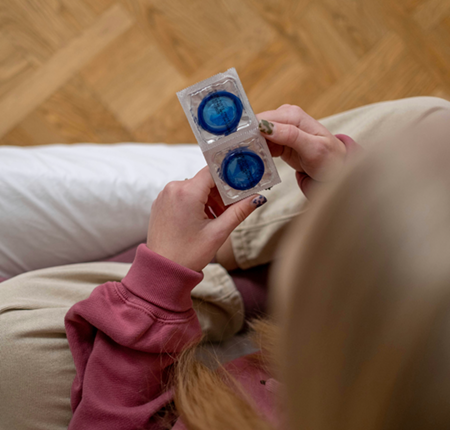
One of the most widely used barrier contraceptive methods, the male condom is applied to the penis before sexual intercourse and provides protection against both pregnancy and sexually transmitted infections. A major advantage of the male condom is that it is easy to find and very affordable.
The female condom as a contraceptive method after childbirth
The female condom is an alternative to the male condom, which is used internally. You just need to insert it into the vagina before sexual intercourse, and it creates a barrier between sperm and the cervix to prevent another pregnancy.
Diaphragm as a contraceptive method after childbirth
The diaphragm is a flexible device that covers the cervix. You need to insert it into your vagina before sex and use it with spermicide to effectively protect against pregnancy. Keep in mind that after giving birth, you may need to adjust the size for a proper fit.
Cervical cap as a contraceptive method after childbirth
Another barrier contraceptive method that is recommended to be used in conjunction with spermicide, the cervical cap is a smaller, silicone device that covers the cervix and prevents sperm from entering the uterus. You just need to make sure you position it correctly so that it works effectively.
Spermicides as a contraceptive method after childbirth
Spermicides are substances that kill or immobilize sperm, available in the form of gels, foams, or ovules. You need to apply them before sexual intercourse, and generally use them in conjunction with other barrier methods, such as a diaphragm or cervical cap, to be effective.
Permanent contraceptive methods after childbirth
If you do not want children in the future and are certain of this, there are permanent contraceptive methods that you can use after giving birth. These involve medical interventions and are considered definitive methods of contraception, so decisions are made only after careful consideration with a doctor.
Tubal ligation as a permanent contraceptive method after childbirth
Tubal ligation is a surgical procedure for women who decide they no longer want to get pregnant, in which the fallopian tubes are blocked or severed. This method essentially prevents sperm from meeting the egg and provides permanent protection against pregnancy without affecting your hormone levels or menstrual cycle.
Partner vasectomy as a permanent contraceptive method
Vasectomy is a surgical procedure performed on men that involves blocking the vas deferens, thus preventing the release of sperm into the semen. It is a safe and effective method that does not affect a man's libido or sexual function.
Emergency contraception after childbirth
Emergency contraception can be a quick way to prevent pregnancy after unprotected sex, or if your birth control method has failed. But it's important to use it as soon as possible. The longer it takes after sex, the less effective it becomes.
The morning-after pill as an emergency contraceptive method after childbirth
The morning-after pill is one of the most widely used emergency methods. You can use it after unprotected sex, and it is important to take it as soon as possible for its effectiveness to be as high as possible.
But always consult your doctor first, especially if you are breastfeeding, because they will advise you which pill to choose so that it does not affect your milk production.
The copper IUD as an emergency contraceptive method after childbirth
The copper IUD can also be used as an emergency contraceptive. Your doctor should insert it within the first 5 days after intercourse to provide high protection against pregnancy, after which you can continue to wear it as a long-term contraceptive method.
Choosing the right method of contraception after childbirth
Choosing a contraceptive method after giving birth is not a one-size-fits-all solution. The right solution for you may be different from the ideal options for other women and depends on factors related to your health, lifestyle, and future plans:
- If you are breastfeeding, as some hormonal methods may influence lactation
- Your medical history, including any conditions or contraindications
- Your personal preferences (for example, whether you prefer daily administration, long-term protection, hormone-free contraception, etc.)
- If you want a pregnancy in the future, in the short or long term
In short, the most suitable contraceptive method is the one that protects you effectively, but also ensures your physical and emotional comfort while your body is still recovering. And postpartum gynecological control is essential in this whole process to make the best decision.
The advantages of family planning after childbirth
According to available data , between 32-65% of postpartum women did not benefit from family planning as they needed between 2005 and 2013. As a result, the World Health Organization (WHO) launched the digital tool Postpartum Family Planning Compendium to support informed decisions on contraception in the first 12 months postpartum and thus prevent close and unplanned pregnancies.
Depending on your own health status, any treatments you are undergoing, and your lifestyle, careful family planning brings a number of important long-term benefits for you and your child:
- Allows the body to fully recover after pregnancy and childbirth
- Reduces risks associated with close pregnancies
- Helps with responsible family planning
- Contributes to protecting the health of mother and child
Frequently asked questions about contraception after childbirth
Sooner or later, after giving birth, it is normal to have questions about fertility, resuming sex, and how to take care of your and your baby's health. You can openly ask all these questions to your doctor at your first postpartum consultation, when you can also choose the right contraceptive method for you. Until then, however, we will answer the most frequently asked questions below to provide you with useful information about contraception after childbirth.
Can I get pregnant if I'm breastfeeding?
Yes, it is possible. Breastfeeding can delay ovulation, but it does not always provide complete protection, especially if you do not meet the conditions of the lactational amenorrhea method. If you do not breastfeed exclusively or if the frequency of breastfeeding decreases, the risk of pregnancy increases.
What contraceptive methods are safe during breastfeeding?
Condoms, the copper IUD, and progesterone-only birth control methods are generally considered safe while breastfeeding. Your doctor will advise you on the right decision for you based on your individual needs.
When can the IUD be inserted after childbirth?
The IUD can be inserted immediately after birth or a few weeks postpartum, depending on the doctor's recommendation and how the body has recovered.
Which contraceptive method is most effective after childbirth?
Long-term reversible methods, such as the IUD or contraceptive implant, are among the most effective because they do not depend on daily administration.
How long after birth can ovulation occur?
Ovulation can occur shortly after birth, even 4-6 weeks, sometimes before the first period. Therefore, pregnancy is possible even without obvious signs.
When can sex life be resumed after childbirth?
You can usually resume your sex life after your postpartum checkup if your doctor confirms that healing is complete and that there are no other risks.
Can I take contraceptives if I'm breastfeeding?
Yes, but not all types are suitable while breastfeeding. Progesterone-only pills are generally recommended as they do not significantly affect milk production.
Is the morning after pill safe?
You can use the morning-after pill, but it is important to consult your doctor first and choose a variant that is compatible with breastfeeding.
What non-hormonal contraceptive methods are there after childbirth?
Barrier methods such as condoms or diaphragms, the copper IUD, and the lactational amenorrhea method are hormone-free options that can reduce the risk of pregnancy in the postpartum period.
How long after giving birth is a new pregnancy recommended?
Doctors generally recommend an interval of at least 12-18 months between pregnancies to give the body time to fully recover and to reduce the risk of complications.
Photo sources: Pexels.com


and happily breaking taboos!


