
Turner Syndrome: Causes, Symptoms, Manifestations & Treatment
Turner syndrome, also called congenital ovarian hypoplasia syndrome, is a rare genetic disease that affects women.
Girls born with Turner syndrome may experience physical and hormonal development problems from childhood, but the diagnosis is often not made immediately. A 2023 case study describes a patient who was diagnosed with Turner syndrome at the age of 61.
Read the article to learn what the signs of the condition are, what medical problems it is associated with, and what treatments exist.
What is Turner syndrome?
Turner syndrome is a rare genetic condition that affects only females from birth. It is the most common sex chromosome abnormality and is characterized by the partial or complete loss of one of them.
Every baby is born with a pair of chromosomes. Normally, boys are born with one X chromosome and one Y chromosome, and girls with two X chromosomes. But in about 1 in 2,000-2,500 newborn girls, one of the X chromosomes is partially or completely missing, hence the name monosomy X for Turner syndrome.
The diagnosis is most often made late, in childhood or adolescence, and less often immediately after birth. Suspicions arise when the chromosomal abnormality affects the girl's physical and reproductive development.
When all the cells in the body contain this genetic error, the patient suffers from the full form of Turner syndrome. Many develop more obvious symptoms from childhood, which also allows for a quicker diagnosis.
But there are also cases where only some of the cells are affected. In the partial form of the syndrome, some of the cells have normal chromosomes, and some contain abnormalities such as partial or complete loss of the X chromosome. This mixture of cells is called mosaicism and can manifest itself in milder or less obvious symptoms that differ greatly from one person to another and are usually diagnosed later.
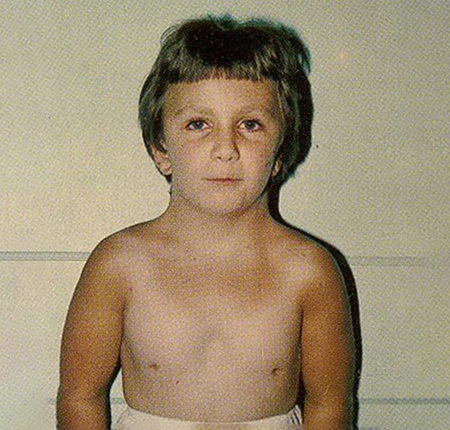
Patients generally have normal intelligence, but physical symptoms appear: they are shorter in stature, may have a shorter and wider neck, large distances between nipples, swollen hands and feet due to fluid accumulation, an outward deformation of the forearm, or difficulty in assessing the relationship between objects in space, for example while driving.
What are the causes of Turner syndrome?
Researchers still don't know why one of a newborn's X chromosomes is missing or incomplete. But they do know that this change is not caused by anything the parents did or could have prevented, their lifestyle, or family history. Although it is genetic, it is only very rarely inherited.
What actually happens is that the anomaly occurs spontaneously, either as a result of a change in the X chromosome during fetal development, or during cell division when the egg or sperm is formed and the genetic material does not divide correctly. One of the X chromosomes is not properly transmitted from one of the parents and what we call monosomy X occurs, a situation in which cells have only one X chromosome instead of two.
There are also cases where not all cells are affected. In mosaic Turner syndrome, some cells have a normal structure and only some have this change, which can make the symptoms less obvious.
At the same time, chromosomal changes are not always limited to the complete absence of an X chromosome. Sometimes it is present, but has an abnormal structure. We are talking about changes such as:
- Deletions, when certain fragments of the chromosome are missing.
- Isochromosomes, when some parts are duplicated or rearranged.
- Ring chromosome, when it has an atypical, circular shape
All these abnormalities reduce or modify the genetic information necessary for the normal functioning of the body, particularly affecting the processes of growth and reproductive development and thus leading to the appearance of Turner syndrome.
What types of Turner syndrome are there?
Continuing the discussion started above, there are several types of Turner syndrome. Two women with the same condition can exhibit very different symptoms. The signs, severity of symptoms, and timing of diagnosis depend largely on the genetic form of the disease.
In patients with the classic form of the disease, called Turner syndrome with karyotype 45,X or complete monosomy X, all cells in the body have only one X chromosome instead of two. Symptoms usually appear in childhood and are more obvious, so doctors can make a diagnosis sooner.
In those with mosaic Turner syndrome, because only some of the cells are affected and the rest have normal X chromosomes, symptoms can be more subtle. So in practice, the diagnosis is often made only in adolescence or adulthood.
There is also a form of Turner syndrome caused by structural abnormalities of the X chromosome. Patients with this type of condition have both X chromosomes present, but one has an altered structure. For example, fragments are missing, certain parts are duplicated, or the chromosome has a ring shape.
Each type of syndrome determines how the condition may progress and thus how quickly a diagnosis is obtained. The complete form is usually easier to recognize, while the mosaic or structural forms may be more subtle but can still affect stature, ovarian function, and overall health.
What are the symptoms of Turner syndrome?
Turner syndrome can manifest itself differently depending on age and developmental stage. As you read the following lines, you will see how some signs are detected even in the prenatal period, while others only become visible in childhood, adolescence, or adulthood.
Turner syndrome prenatal symptoms
Specialized literature shows that Turner syndrome with karyotype 45,X, i.e. when a person has only one X chromosome instead of two, occurs in approximately 1-2% of pregnancies.
Through detailed ultrasounds, doctors can determine certain specific signs from the prenatal period:
- Fluid accumulation in the neck area (cystic hygroma)
- Ultrasound-detected fetal edema (i.e. visible tissue swelling)
- Cardiac abnormalities identified during pregnancy monitoring
- Intrauterine growth retardation, when the fetus is smaller than would be normal for the week of pregnancy
The majority of these pregnancies do not continue to term. Approximately 10% are lost in the first trimester and 1% are stillbirths, and over 99% of fetuses with this karyotype do not survive beyond 28 weeks of gestation.
This explains why girls and women living with Turner syndrome most often have a form of mosaicism, meaning that only some of their cells have a chromosomal abnormality.
Turner syndrome symptoms at birth
Turner syndrome is rarely diagnosed at birth, but physical features that may indicate this condition include:
- Swelling of the hands and feet, due to fluid accumulation
- Short neck or with skin folds
- Small stature compared to the average newborn
- Broad chest with wide-set nipples
For example, a case reported in 2021 lists swelling of both legs after birth, a neck with skin folds, and a small lower jaw among the clues that led to the diagnosis of Turner syndrome in an 8-day-old newborn.
Turner syndrome symptoms in childhood
As the child grows, increasingly obvious signs of Turner syndrome may appear, such as:
- Slow growth and small stature
- Delayed pubertal development, which may start later or be incomplete
- Frequent ear infections, due to anatomical peculiarities of the respiratory tract and middle ear
- Learning difficulties, especially in mathematical or spatial areas, although general intelligence is usually normal
Slow growth and short stature compared to other children of the same age are often the first signs that prompt further investigation. In a 2012 publication , Dr. Louise Newson reported on the case of a mother who was concerned about her 5-year-old daughter's short stature compared to other children. Two years later, after tests were performed because of this persistent concern, the patient was diagnosed with Turner syndrome.
Turner syndrome symptoms in adolescence and adulthood
During adolescence, symptoms specific to Turner syndrome are largely related to ovarian function and sexual development. Patients may experience:
- Lack of development of secondary sexual characteristics, such as breasts and pubic hair
- Infertility or ovarian failure
- Primary amenorrhea , meaning they don't have menstruation
- Persistent short stature, with height remaining below average (most patients have an average height of ~1.30 m as an adult)
A classic case of Turner syndrome discovered in adolescence is that of a 16-year-old patient who presented to the physician with primary amenorrhea. On clinical examination, she had short stature, skin folds at the corners of the eyes, and small fingers, especially the fourth finger. The patient was referred for chromosomal analysis, which revealed a 45,X karyotype and confirmed the diagnosis.
What physical characteristics are common in Turner syndrome?
Are you wondering how to recognize the symptoms of Turner syndrome? The truth is that each patient's experience is unique and not everyone will have the same symptoms. However, some of the most common physical features include:
- Short stature, specific to Turner syndrome, which is also one of the most common and visible characteristics
- Neck with skin folds (pterygium colli)
- Broad chest with wide-set nipples
- Low hairline at the nape of the neck, when the bottom of the hair is lower
- Swelling of hands and feet at birth
- Low-set ears, meaning the position of the ears is lower
- Narrow or deformed nails
- Small lower jaw, which can affect the shape of the face.
What medical problems are associated with Turner syndrome?
In practice, in addition to physical features, Turner syndrome is often associated with other medical problems that affect patients' general health:
- Congenital heart defects, such as narrowing of a section of the aorta (coarctation of the aorta) or other heart valve abnormalities. About half of patients with Turner syndrome have such abnormalities.
- Kidney problems and structural abnormalities of the kidneys
- Endocrine disorders, including hypothyroidism
- Infertility and primary ovarian insufficiency
- Hearing problems, often caused by repeated middle ear infections
- Vision problems, such as visual acuity deficiencies or other eye conditions
Learning and cognitive development difficulties, especially in the mathematical and spatial domains

What complications can occur in Turner syndrome?
People with Turner syndrome are at increased risk of cardiovascular disease and may suffer from hypertension (high blood pressure) from a young age.
Hormonal imbalances can further affect their blood sugar and metabolism, leading to diabetes and metabolic disorders, while hormonal deficiency can affect bone density and increase the risk of osteoporosis. Furthermore, hormonal changes and metabolism can contribute to weight gain and increase the risk of obesity.
Autoimmune thyroid diseases, such as Hashimoto's thyroiditis, are also complications that may be present in patients with Turner syndrome.
How is Turner syndrome diagnosed?
As you probably already realized from the discussion about symptoms, Turner syndrome can be diagnosed either before birth or after the child is born, depending on the investigations performed and the visible signs.
The earlier it is identified, the sooner the necessary treatment can be implemented to reduce the severity of the manifestations.
Turner syndrome prenatal diagnosis
During pregnancy, doctors can detect certain signs of the condition through a combination of genetic testing and ultrasound scans.
Prenatal genetic screening (non-invasive genetic testing) allows the analysis of fetal DNA from maternal blood and can identify if there are chromosomal abnormalities. Abnormalities can also be identified through fetal ultrasound, for example to detect edema or cardiac abnormalities.
Prenatal diagnosis is confirmed by amniocentesis. The doctor collects amniotic fluid containing fetal cells, which are analyzed to check for chromosomes. Another method is chorionic villus sampling, which takes a small portion of the fetus's placenta to analyze the chromosomes and detect any abnormalities.
Turner syndrome postnatal diagnosis
After birth, diagnosis is based on clinical observations and genetic testing.
Short stature, broad neck, chest with widely spaced nipples, and other suspicious physical features are evaluated during the clinical examination. This is followed by karyotype analysis to confirm monosomy X and genetic testing to identify mosaic forms.
Depending on each patient's situation, the doctor may recommend additional cardiac and renal evaluations to detect and monitor any associated problems.
What treatment is there for Turner syndrome?
Treatment for Turner syndrome is personalized according to the needs of each patient and the genetic form of the condition, and its role is to support growth, reproductive development, and contribute to the management of associated complications.
Turner syndrome growth hormone treatment
If the syndrome is diagnosed early, growth hormone administration can help the patient improve their stature and even reach a near-normal height. Therapy is most effective if it begins as early as possible in childhood, and height and development are constantly monitored during treatment to adjust doses and achieve optimal results.
Turner syndrome hormone treatment with estrogen
Estrogen hormone therapy can be initiated in adolescence, at the appropriate time to stimulate puberty and support reproductive development.
Estrogen treatment stimulates the development of secondary sexual characteristics such as breast growth, pubic hair, and other normal physiological changes in adolescents, and may contribute to the prevention of osteoporosis and the maintenance of bone health in adult patients.
Turner syndrome treatment of associated complications
If your doctor detects problems associated with Turner syndrome, they may recommend specific treatments to manage them.
Regular monitoring or, if necessary, surgical interventions allow for the treatment of heart defects. Treatments may be recommended to control endocrine disorders such as hypothyroidism, as well as specific treatments to manage hearing or kidney problems and prevent complications.
Turner syndrome periodic medical monitoring
To prevent complications and protect their long-term health, patients with Turner syndrome are recommended to undergo constant monitoring.
It is important for them to undergo regular cardiological check-ups to assess blood pressure and heart function, endocrine function checks through periodic tests for thyroid and sex hormones, and bone density assessments to prevent osteoporosis.
Gynecological monitoring is also important to track reproductive and ovarian health.

How Turner syndrome affects fertility
Many women with Turner syndrome either do not menstruate or have small ovaries that do not produce enough sex hormones and may only function for a few years or not at all.
Therefore, the syndrome directly influences ovarian function and reproductive capacity, and the effects may vary depending on the genetic form of the disease.
In most cases, although fertility is reduced, there are medical options that can support conception.
Turner syndrome infertility
Infertility is commonly associated with Turner syndrome as a result of primary ovarian insufficiency. The ovaries do not produce enough hormones or eggs to support normal reproduction.
In addition, most people with Turner syndrome do not ovulate, which greatly reduces the chances of pregnancy.
Turner syndrome and menstruation
In general, patients diagnosed with Turner syndrome either do not have a menstrual cycle or experience irregular menstruation.
Many of them present to the doctor complaining of primary amenorrhea, that is, the absence of a menstrual cycle since the onset of puberty. They often have small ovaries, which do not produce enough hormones necessary for menstruation and which partially or completely lose their function, leading to ovarian failure.
In the rare cases where patients with Turner syndrome have menstruation, this happens because the syndrome is mosaic, so some of their cells are normal and allow the ovary to function.
In both situations, hormone therapy can induce and regulate the menstrual cycle, supporting reproductive development and menstrual health. Intimate care products made with pure ingredients and free of irritating chemicals can also contribute to a more peaceful and comfortable menstrual experience.
Turner syndrome assisted reproduction
For women who want to become mothers but are unable to get pregnant, assisted reproductive technologies such as intrauterine insemination can help overcome the biological limitations imposed by ovarian failure. In vitro fertilization (IVF), for example, can support the achievement of a pregnancy using the woman's own eggs (if available) or donated eggs.
Turner syndrome oocyte donation
Another frequently used alternative for patients who wish to become pregnant is egg donation, which allows conception even in the absence of ovarian function. However, given the increased cardiovascular risk associated with Turner syndrome, cardiological evaluation is necessary before the procedure to assess safety during pregnancy.
What is life like with Turner syndrome?
You can have an active and healthy life even with a diagnosis of Turner syndrome, provided you monitor your symptoms properly and receive the necessary medical support.
Most people with Turner syndrome live long and productive lives, and if associated problems and complications are monitored and treated, the condition does not shorten life expectancy. Therefore, regular cardiac, endocrine, and gynecological check-ups are recommended to prevent long-term complications.
Access to education and social activities tailored to individual needs are equally important to support personal development, and psychological support can help both children and adults manage the associated emotional and social challenges.
Frequently asked questions about Turner syndrome
Turner syndrome is a rare condition. So if you feel like you have a lot of questions about what causes X chromosome abnormalities, how they manifest, and what impact they can have on your life, that's perfectly normal. Below, we answer some of the most frequently asked questions about this condition.
Is Turner syndrome inherited?
Turner syndrome usually occurs spontaneously and is not inherited. Most cases result from chromosomal errors in the egg or sperm, with no connection to family history.
Can Turner syndrome be prevented?
Currently, there are no methods of prevention because the exact cause is unknown. The syndrome occurs randomly, at the time of the formation of reproductive cells. However, early detection through prenatal genetic testing can help plan medical monitoring.
Can women with Turner syndrome have children?
Patients with this condition have reduced fertility due to ovarian failure, but assisted reproductive technologies and oocyte donation offer options to achieve a pregnancy following medical evaluation.
What is the life expectancy in Turner syndrome?
People with Turner syndrome can have a life expectancy close to normal if associated cardiac, endocrine, and metabolic problems are monitored and treated appropriately.
How does Turner syndrome manifest itself in children?
In children, Turner syndrome may be characterized by short stature, a broad neck, a broad chest with widely spaced nipples, hearing problems, and frequent ear infections. Affected girls may grow more slowly than other girls their age, and the onset of puberty may be delayed.
What genetic tests confirm Turner syndrome?
Diagnosis is established by clinical examination with karyotype analysis to check for the presence of monosomy X and genetic testing for mosaic forms. In the case of prenatal diagnosis, confirmation is made by chorionic villus sampling or amniocentesis.
At what age is Turner syndrome diagnosed?
Diagnosis can be made prenatally through genetic screening and fetal ultrasound, at birth if obvious physical signs appear, or in childhood or adolescence if growth or puberty is delayed. There are also cases in which the diagnosis is made in adulthood, when symptoms are observed later.
Does Turner syndrome affect intelligence?
Most people with Turner syndrome have normal intelligence, but may experience difficulties in mathematical or spatial skills, for example while driving.
What cardiac complications can occur in Turner syndrome?
Possible cardiac complications include coarctation of the aorta, which is a narrowing of a section of the aorta, and bicuspid aortic valve, which has two cusps instead of three.
What role does growth hormone play in the treatment of Turner syndrome?
Growth hormone supports height growth and the maintenance of normal body proportions. Its effectiveness is increased the earlier treatment is started in childhood, and periodic monitoring allows dosage adjustment for optimal results.
Photo sources: Wikipedia; Pexels.com


and happily breaking taboos!


