
Testosterone in women: High / elevated & low testosterone in women
Typically associated with men and masculinity, testosterone is an essential hormone for women as well. It influences your bone health, sexual function, and overall energy levels, and observational studies suggest it may have beneficial effects on the cardiovascular system.
A study of 161 healthy, regularly menstruating women found that testosterone levels tend to decline with age, without fluctuating much with the menstrual cycle. At the average age of 30, normal total testosterone levels for women range from 15-46 ng/dL, about 10-20 times lower than in men.
Read the article and find out how testosterone levels are measured, what happens when they are outside the normal range, and how to treat a possible imbalance.
What is testosterone?
Testosterone is an androgen hormone present in both men and women. It is part of the endocrine system, that is, the network of hormones that influence processes such as energy, libido, muscle mass, and bone health.
In men, it is responsible for the development of male sexual characteristics, while in women, the development of sexual characteristics is mainly influenced by estrogen. For this reason, most people associate testosterone with masculinity.
But in reality, a woman's body produces about three to four times more testosterone than estrogen every day, according to the literature . It is of particular importance to female health, having well-established roles in the body.
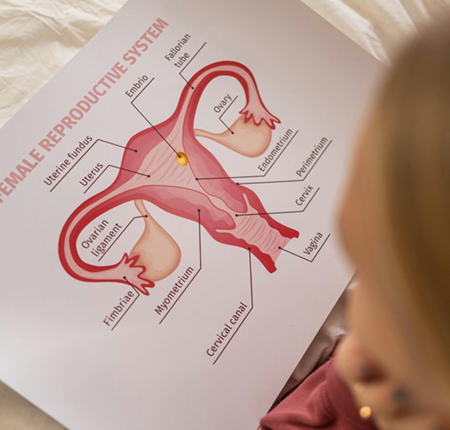
The ovaries and adrenal glands are the organs that produce testosterone in a woman's body. Compared to a man's body, your body normally produces 10-20 times less testosterone, and it works closely with estrogen. Some of it is even converted into estrogen, affecting your menstrual cycle, bone health, sexual function, overall well-being, and hormonal balance.
The role of testosterone in the female body
Even though it's present in smaller amounts than in men, testosterone plays an important role in how your body functions. It influences several processes in the female body, from energy and metabolism to libido and emotional state:
- It helps maintain sexual desire, and some studies suggest that it may influence your libido, especially after menopause, but its effectiveness is not guaranteed and is still being studied.
- It supports the development of muscle mass and helps maintain bone density.
- It influences energy levels, motivation, and vitality.
- Supports concentration, cognitive functions and mental clarity.
- It has an impact on mood, contributing to emotional balance.
- It is involved in metabolism and how the body manages body composition, that is, the percentages of fat, bone, and muscle in the body.
Where is testosterone produced in women?
The female body produces testosterone naturally, through a complex mechanism involving several endocrine glands. The ovaries and adrenal glands are the main source, as they secrete approximately 40-50% of the total amount of testosterone. But some of it is also formed in fat cells, skin cells and through the transformation of other hormones.
Production in ovaries
The ovaries secrete testosterone through theca cells in the ovarian follicles, stimulated by luteinizing hormone (LH). These convert cholesterol into androgen hormones, including testosterone, which is then used directly in the body or converted to estrogen.
The level of testosterone secreted can vary slightly throughout the menstrual cycle, depending on ovarian activity, but recent research shows that the fluctuations are very small.
Production in the adrenal glands
The other main source of testosterone in the female body is the adrenal glands, located above the kidneys. They secrete hormones such as dehydroepiandrosterone (DHEA) and other hormone precursors that can later be converted into testosterone.
Adrenal gland activity is also influenced by stress, which can indirectly affect hormone levels. Prolonged periods of stress and chronic stress are associated with changes in the hormonal response of the adrenal glands, including a decrease in testosterone receptors, according to an experimental study published in PubMed Central .
Conversion of other hormones into testosterone
Some testosterone is not produced directly, but results from the conversion of other androgen hormones. Precursors such as androstenedione and DHEA are converted to testosterone in various tissues in the body, for example in adipose tissue and muscle tissue.
This process contributes to maintaining the balance between androgens and estrogens, which plays a role in regulating metabolism, psychological health, and the normal functioning of the female body.
Normal testosterone levels in women
Normal testosterone levels in women are much lower than in men. Typically, as long as you are in your reproductive years, it is in the range of 15-46 ng/dL.
Tests can measure two main forms of testosterone: total testosterone, which includes all of the hormone in your blood, and free testosterone, the active form that directly affects your body. Both can provide useful information, especially when investigating a possible imbalance.
Age, the phase of your menstrual cycle, the stress you are exposed to, and certain conditions or hormonal treatments can influence the levels of this hormone, so the interpretation of the tests should always be done in a clinical context.
Testosterone levels in women by age
During the reproductive period, for women aged ~30, testosterone levels are relatively stable and have very small variations throughout the menstrual cycle.
Total testosterone values range from 15-46 ng/dL, and the active form is between 1.2 and 6.4 pg/mL, according to the study published in The Journal of Sexual Medicine (Braunstein et al., 2011, PMID: 21771278).
Although there may be a slight increase around ovulation, these fluctuations are usually not significant. As we age, testosterone levels tend to gradually decline naturally.
Testosterone levels before and after menopause
During perimenopause and after menopause, your body's androgen levels, including testosterone, gradually decline. These endocrine changes can affect your energy, libido, and body composition.
But even after menopause, testosterone continues to play an important role in bone health and overall well-being.
Increased testosterone in women
Also known as hyperandrogenism, elevated testosterone occurs when the level of androgen hormones is above the range considered normal.
It is a hormonal imbalance that can influence several important functions, including the appearance of your skin and hair, the way your body processes fat and muscle mass, fertility and menstrual cycle, changes that can further affect your reproductive health.
For example, some women experience irregular ovulation or have difficulty getting pregnant.
Common causes of elevated testosterone in women
Polycystic ovary syndrome (PCOS) is by far the most common cause of elevated testosterone in women, as confirmed by several studies and meta-analyses . The high insulin levels associated with this condition cause the ovaries to produce too much testosterone.
Other common causes of increased testosterone in women's bodies can be:
- Adrenal gland disorders
- Insulin resistance and metabolic syndrome
- Ovarian or adrenal tumors that produce excess hormones
- Administration of hormonal or steroid medications.
Symptoms of high testosterone in women
Although there are also asymptomatic cases, in general, high testosterone in women can manifest itself through numerous visible symptoms. Among the most common signs are:
- Hirsutism and excessive facial hair growth
- Persistent acne and oily skin
- Male pattern hair loss
- Irregular menstruation or lack of menstruation
- Difficulties in conception and infertility
- Deepening of the voice in severe cases
- Changes in body composition
For example, according to one case study , a 34-year-old female patient with significantly elevated testosterone presented to the doctor with amenorrhea after an initial period of irregular menstruation.
Another case study presents the situation of a 42-year-old patient with a testosterone level approximately 15 times higher than the normal level for women, who experienced not only amenorrhea, but also other visible signs such as alopecia (hair loss), deepening of the voice, and increased facial hair.
Low testosterone in women
Although naturally present in small amounts in a woman's body, testosterone plays an important role in maintaining energy, sexual function, muscle mass, and overall hormonal balance. And when its levels fall below the normal range, we talk about low testosterone.
A testosterone deficiency can affect your energy levels, muscle strength, and bone density, which can make you feel more tired, irritable, and less motivated. Furthermore, low testosterone levels in women are also associated with depressive symptoms, anxiety, decreased emotional resilience, and feelings of being overwhelmed.
While a slight, natural and gradual decline in testosterone levels is absolutely normal with age, a significant hormonal deficiency can be caused by other causes and may have more pronounced symptoms that require medical investigation.
Causes of low testosterone
A gradual decline in testosterone occurs naturally with age, especially during menopause and perimenopause, as part of the hormonal aging process.
But there are other causes that can lead to a significant decrease in testosterone levels in women's bodies even during their reproductive years, including:
- Ovarian failure
- Surgical interventions on the ovaries
- Hormonal or contraceptive treatments that can influence androgen production
Symptoms of low testosterone in women
According to a 2002 excerpt from the World Journal of Urology , symptoms of low testosterone in women are subtle and often nonspecific. Their sexual desire, satisfaction, and mood can be affected, and the signs are often mistaken for depression, leading to referral for counseling or psychotherapy even though hormonal evaluation would be more appropriate.
Other common symptoms of a testosterone deficiency in women include:
- Decreased libido
- Persistent fatigue
- Reduction in muscle mass
- Difficulty concentrating
- Decreased bone density
- Mood changes
Testosterone tests in women
Doctors mainly recommend blood tests to measure the concentration of testosterone levels in the female body and determine if there is a hormonal imbalance, for example when the patient experiences symptoms such as acne, irregular menstruation, or changes in energy levels.
The timing of the collection can slightly influence the results, so you will generally be advised to perform the analysis in the morning, during a certain phase of the menstrual cycle, when hormonal levels are more stable.
In practice, both total testosterone, which shows the total amount of the hormone in the blood, and free testosterone, which is the active form available in the body, are analyzed. Less commonly, the doctor may also recommend a bioavailable testosterone analysis to measure free and albumin-bound testosterone in the blood.
All these values are always interpreted according to the laboratory's reference ranges and the clinical context, not just based on a single value, to obtain the clearest possible picture of hormonal status.
There are also situations when additional investigations are necessary to determine the cause of the imbalance, and hormones frequently investigated alongside testosterone include DHEA-S, SHBG, estrogens, luteinizing hormone (LH) and follicle-stimulating hormone (FSH).

Treatment for testosterone imbalances in women
If you have a testosterone imbalance, your doctor will recommend the right treatment depending on the cause of your hormonal changes. For example, if you have high testosterone due to polycystic ovary syndrome, you may be prescribed hormone medication. If the imbalance has other causes, your doctor may opt for other approaches.
Therefore, it is very important to obtain a correct diagnosis before starting any kind of therapy so that the doctor can determine the most effective treatment.
In most cases, in addition to regulating testosterone levels, treatment also focuses on balancing the entire hormonal system, with values being monitored periodically.
Treatment for high testosterone in women
Patients with polycystic ovary syndrome are usually prescribed hormonal medication, such as combined birth control pills, to regulate testosterone levels and the menstrual cycle.
On the natural side, inositol is a supplement commonly used to support reduced testosterone levels and improve insulin sensitivity in PCOS patients. Lifestyle adjustments, including diet and physical activity, are also commonly recommended in cases of insulin resistance.
In some situations, for example when patients suffer from acne or hirsutism, the doctor may also recommend medications with an antiandrogenic effect, with the aim of blocking the action or reducing the production of male hormones.
Treatment for low testosterone in women
For low testosterone, treatment may include hormone therapies or doctor-prescribed supplements such as DHEA, magnesium, and vitamin D, depending on symptoms and test results.
For menopausal women who experience a loss of sexual desire due to the natural decline of this hormone, a doctor may prescribe various creams, gels, or patches with low doses of testosterone. Lifestyle changes, including strength training and increasing the number of hours of sleep, may also be recommended to improve energy levels, mood, and sexual function.
During any type of drug treatment, it is essential that the patient be monitored to adjust doses based on the body's response to therapy, thus avoiding the emergence of new imbalances.
How can you maintain hormonal balance?
There are numerous lifestyle factors that influence your hormonal balance, because hormones are mainly regulated by the endocrine system, which you can disrupt, or you can support through your daily habits.
Do you want your daily routine to have the most positive impact on your hormone levels? Then adopt a balanced diet with adequate nutrient intake. Opt for sources of protein, healthy fats, complex carbohydrates, and micronutrients that support your energy levels and the proper functioning of your hormonal system.
Also, practice regular physical activity to support your metabolism, hormonal levels, and maintain a healthy body weight.
Stress has a direct impact on the endocrine system, so it is important to manage it as effectively as possible, ensure quality sleep, and maintain a stable circadian rhythm to support your hormonal health.
Last but not least, periodically monitor your metabolic health through regular consultations, to identify any imbalances early and correct them before they cause complications.

When to consult a doctor about testosterone in women
Wondering when it's time to see your doctor about your testosterone levels? As soon as you notice persistent symptoms that may suggest a hormonal imbalance.
In other words, if you notice unusual changes in your menstrual cycle, such as no menstruation or heavy menstruation that requires you to change menstrual products very frequently, if your mood changes radically, you have difficulty getting pregnant, or you develop signs of androgenization such as hair loss, deepening of the voice, or pronounced facial hair, it's time for a hormonal evaluation.
The doctor may recommend various additional investigations depending on your symptoms and your own context, and will interpret the analyzes and correlate them to establish the correct diagnosis.
Also depending on the symptoms, endocrinological evaluation and gynecological consultation may be necessary to accurately identify the cause and the appropriate treatment plan.
Frequently asked questions about testosterone in women
Still not sure how testosterone affects you or what the signs of an imbalance are? Below we answer the most frequently asked questions about testosterone in women, how it's measured, and what symptoms to look out for, based on available medical information.
What are normal testosterone levels in women?
Normal testosterone levels are much lower in women than in men and generally range from approximately 15-46 ng/dL for women of reproductive age. Interpretation is always made in a clinical context and based on laboratory reference values.
What symptoms occur when testosterone is elevated in women?
Increased testosterone can manifest itself in persistent acne, excessive body or facial hair growth, irregular periods, and, in some cases, difficulty getting pregnant.
What does hyperandrogenism mean in women?
Hyperandrogenism is an increased level of androgen hormones in the female body, including testosterone, and this imbalance can affect the menstrual cycle, skin, hair, and fertility.
How are testosterone levels measured?
Testosterone levels are measured through blood tests that can check total testosterone, free testosterone, and bioavailable testosterone, depending on your doctor's recommendations.
What tests are recommended for hormonal imbalances?
In addition to testosterone, the doctor may recommend tests such as DHEA-S, SHBG, estrogens, LH, and FSH for a complete hormonal evaluation.
Can high testosterone affect fertility?
Yes, elevated testosterone levels can influence ovulation and lead to irregular cycles, which can reduce the chances of conception.
What symptoms occur when testosterone is low?
When your testosterone levels are low, you may feel more tired, have difficulty concentrating, lose your sex drive, and notice a reduction in muscle mass and mood changes.
How is high testosterone in women treated?
The doctor recommends the appropriate treatment depending on the cause, and this may include lifestyle changes, hormone therapies, supplements, and other medications, for example to regulate insulin resistance or to treat polycystic ovary syndrome.
Are there natural methods for regulating testosterone?
A nutritious diet, regular exercise, quality sleep, and stress management techniques can support hormonal balance, but they do not replace medical treatment when an imbalance already exists.
When is an endocrinological consultation necessary?
Medical consultation is recommended when persistent symptoms of hormonal imbalance occur, such as changes in the menstrual cycle, signs of androgenization, or abnormal results in hormonal tests.
Photo sources: Pexels.com


and happily breaking taboos!


