
How to put on a condom correctly
One of the most effective methods of protection against unwanted pregnancy and sexually transmitted infections is to use a condom. But it works on one condition: you use it correctly. Do you know how to put on a condom correctly?
The good news is that it's very easy. In this article, you'll learn everything you need to know about when and how to use a condom, and what risks and mistakes to avoid, both for your safety and the safety of your partner.
What is a condom?
A condom is a barrier contraceptive method. What does it mean to be a barrier? It is applied to the penis before sexual intercourse and basically becomes a physical barrier that prevents direct contact between the bodies of the two partners.
Why is it so important that it is a barrier method? Because this gives it two main functions:
- By preventing direct contact between sperm and the partner's body, the condom provides protection against unwanted pregnancies.
- By preventing direct contact between the two bodies, including the exchange of fluids, the condom also prevents the transmission of sexually transmitted infections .
The literature has confirmed that correct condom use is the most important factor determining its effectiveness as a contraceptive method. When used properly, it is approximately 97% effective in preventing unwanted pregnancies.
So, to summarize in a few words what a condom is, it is a barrier device made of latex, polyurethane, nitrile or other materials, used during sexual intercourse to significantly reduce the risk of unwanted pregnancy or the transmission of sexually transmitted infections.
The role of the condom
The condom fulfills two main roles.
It protects you from unwanted pregnancies because it retains sperm at the time of ejaculation and prevents direct contact with your partner's body.
They also protect you from sexually transmitted diseases, as they prevent any exchange of fluids between the two bodies. For example, a study published in 2015 states that condoms offer maximum protection, over 90%, against infections such as HIV, hepatitis B, and gonorrhea.
Types of condoms
The history of condoms for safer sex is a long one, the specialized literature tells us. In its primitive forms, it has been used since Antiquity and since then, its purpose was both to prevent pregnancy and to protect against sexually transmitted diseases.
The earliest forms and uses of the device are associated with King Minos of Crete, whose wife used a goat's bladder for protection. In Ancient Egypt, a type of cap for the glans of the penis was used, colored differently depending on social class. The ancient Romans used animal bladders primarily to prevent venereal diseases, not pregnancy. In other words, condoms were made of various materials over time, before the advent of modern latex ones.
Today, there are dozens of types of condoms that cater to different needs and preferences. They differ primarily in materials, but also in how they are used, texture, and other variables:
- Materials: Most condoms are made of latex. They are stretchy, durable, and provide effective protection against pregnancy and infection. For people with latex allergies, there are also non-latex alternatives made of polyurethane or polyisoprene. These protect just as effectively, but are gentler for people with sensitivities.
- How to use: There are both male condoms, which are applied to the penis and are the most popular, and female condoms, which are inserted into the vagina. Both offer effective protection.
- Texture: For people who prefer more intense stimulation, condoms with dots or ridges can provide increased pleasure during sexual intercourse.
- Lubrication: Lubricated or extra lubricated condoms reduce friction, discomfort, and the risk of breakage, for a more comfortable experience; but there are also unlubricated condoms for couples who prefer to use a lubricant chosen separately, according to their own preferences.
- Other variables: Condom types also differ in features like flavor or texture. Some are ultra-thin to provide extra stimulation, some are extra-strong for more security.
In other words, there are dozens of different types of condoms so that every couple can find the right option to enjoy both effective protection and pleasure and comfort.
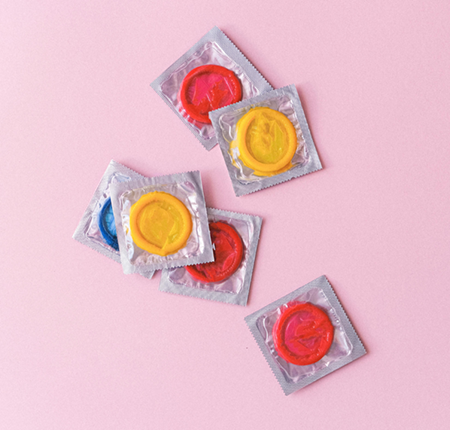
Why correct use is important
The effectiveness of condoms as a method of contraception and protection depends on one main condition: correct use. The condom must be used during every vaginal sexual intercourse, without exception, from the beginning to the end of the act.
Simple mistakes like using the wrong size or putting it on incorrectly can drastically reduce its effectiveness. In other words, you can't expect to be effectively protected if you start sex without a condom and use it too late, if you remove it before the end of intercourse, if you turn it inside out, or if it slips or breaks.
Clinical studies confirm this. For example, in a study of 509 teenage girls tested for sexually transmitted infections, correct and consistent condom use had a protective effect against chlamydia, reducing the risk by about 60%, and a very high protective effect against gonorrhea, reducing the risk by about 90%.
Condom effectiveness
Under perfect use, condoms have a contraceptive effectiveness of about 98% according to official data. But in everyday life, you don't always use them perfectly. Due to incorrect use or human application errors, the effectiveness in typical use can drop to about 82-85%.
There is, therefore, a direct link between how correctly you use a condom and the level of protection it offers you. The more consistently and correctly you use it, the lower the risk of unwanted pregnancy and contracting sexually transmitted infections.
Condom - Risks of misuse
If the condom is not put on correctly, it can slip or break during sexual intercourse, which will compromise the level of protection.
In such situations, because the physical barrier between sperm and the vagina is virtually destroyed, the risk of an unwanted pregnancy increases. Of course, the disappearance of the barrier has the same effect on bodily fluids, which through direct contact can transmit sexually transmitted infections.
Preparation before using a condom
Correct condom use does not start during sexual intercourse, but before, from the stage when you choose the type of product. It is important to check it and prepare properly so as to avoid common unpleasant situations such as breakage or allergies.
Checking the condom packaging and expiration date
Before using a condom, check the expiration date first. An expired condom can lose its elasticity and strength, increasing the risk of breakage.
Also make sure that the packaging is intact, that it is not torn and that there are no areas where air has escaped. If the packaging is damaged, do not use it as there is a risk that the product may no longer be safe to use.
As a general safety measure, always avoid using condoms that, for various reasons, appear compromised. Even small defects can affect the level of protection they provide.
Correct condom storage
Also part of proper preparation is how you store your condoms. Did you know that high temperatures can damage the material and make it more fragile, which can compromise its effectiveness?
Store them in a cool, dry place, away from heat, humidity, and friction. For example, it's not a good idea to keep it in your wallet for a long time, where constant friction and pressure can damage the integrity of the material even if the packaging appears to be intact.
Choosing the right size
Condom size is not chosen based on preference, but on the correct fit. Why? Because a condom that is too tight can easily tear, and one that is too loose can slip during use.
The purpose of a condom is to provide safety and comfort, and it can only fulfill this role if you choose the correct size, which allows for a secure fit and reduces the risk of accidents. There are generally three standard sizes available, designed to fit different types of anatomy:
- Narrow: between 47 and 49 mm
- Medium: between 50 and 54 mm
- Large: between 55 and 57 mm
How do you choose the right size? First of all, you should know that condom size is expressed by the nominal width. This is half the circumference. For example, for a condom with a nominal width of 47 mm, the circumference is 94 mm.
It is recommended that the circumference of the condom be at least 10% smaller than the circumference of the penis so that the condom can fit properly.
Choosing the type of condom
You need to consider three main aspects when choosing the type of condom: effective protection, sensitivities, and personal preferences.
Effective protection during sexual intercourse depends on correct use. The other two aspects are related to choosing the right type of product.
Latex condoms are the most affordable and commonly used. They are durable, stretchy, and offer effective protection against pregnancy and sexually transmitted diseases. But if one partner is sensitive to latex, they are not a good choice. There are non-latex versions, made of polyurethane or other materials, that offer a similar level of protection without the risk of allergies or discomfort.
The amount of lubricant on condoms is another important factor. Most products are already lubricated, with the aim of reducing friction and increasing comfort. But each couple's preferences differ. Do you prefer to use a specific type of lubricant, chosen separately? Then opt for unlubricated condoms. Or on the contrary, do you want even more lubrication? There are also extra lubricated condoms on the market that meet these needs.

How to put on a condom – step by step guide
As we have already mentioned countless times, correct use of a condom is the condition on which its entire effectiveness depends. And correct use is closely related to how correctly it is put on, right from the beginning of sexual intercourse.
The condom is always applied only to the erect penis, before any sexual contact, carefully following all the steps below.
Opening the packaging
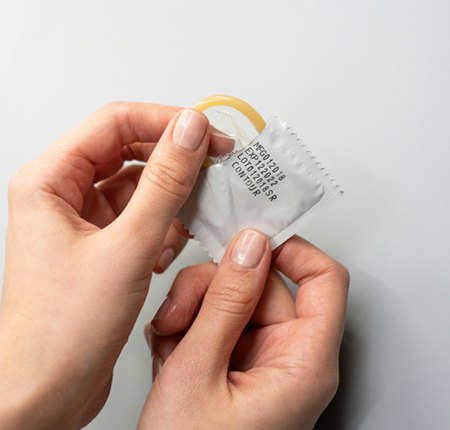
The packaging should be torn gently, on the specially indicated edge. Do not use your nails or sharp objects, to avoid scratching and accidentally damaging the product.
Checking the orientation
Always check the condom for the correct rolling direction. It should be positioned so that it can be rolled easily. The edge should be facing outwards so that it rolls down naturally.
It is recommended to do a quick test before applying. The check is simple, just place the condom on the tip of the penis or on your fingers and try very gently to see if it rolls down without resistance. If it does not roll down easily, it means it is upside down and needs to be turned correctly.
Just be careful to perform the test with gentle movements, without forcing or stretching the material, so as not to damage the condom.
Tip tightening (air removal)
Before rolling it up, gently squeeze the tip of the condom, called the reservoir, to remove any air. The purpose of the reservoir is to hold the sperm when you ejaculate, and this step ensures that there is enough space left for sperm to collect and that the condom won't tear.
Sitting on the erect penis
The condom is only applied when the penis is erect. It is positioned on the tip, checking that it is placed correctly before rolling it down.
Full rollout
You need to make sure you roll the condom all the way up to the base of the penis. Finally, check its stability to see if it is securely attached and to make sure it will not slip during intercourse.
Use during sexual intercourse
The condom should be used from the beginning of sexual intercourse, before any form of penetration or genital contact, to prevent any direct contact between the partners' fluids.
Once in place, it must remain there throughout sexual intercourse to provide effective protection, including against pre-ejaculatory fluid that may contain sperm and infectious agents.
Another thing to consider is choosing a compatible lubricant, if you're going to use one. It's generally recommended to use a natural, water-based lubricant , or a silicone-based one, which is considered safe with latex. This can reduce friction, reducing the risk of breakage and discomfort. Avoid oil-based lubricants, as they can damage the condom material and reduce its strength.
It is very important to change the condom after each sexual act. It is a disposable product and should be replaced even when you switch from one type of contact to another, be it oral, vaginal or anal, to prevent contamination and the transmission of infections.
Condom use during menstruation
Sex during your period is safe, and the risk of pregnancy is generally lower during this time. But that doesn't mean the risk is zero. It's possible to get pregnant even during your period, so you still need a contraceptive method.
In addition, the risk of transmitting sexually transmitted infections may increase during menstruation due to contact with blood, which is why condom use remains just as important.
Beyond the protection provided regardless of the phase of the menstrual cycle, using a condom during menstruation can also offer you other important benefits, such as hygiene and psychological comfort.
At the end of sexual intercourse, it is recommended that both partners prioritize hygiene measures. The partner should carefully remove the condom, holding its base to avoid leaks, and then throw it in the trash, without reusing it or flushing it down the toilet.
It is recommended that you also go to the bathroom to urinate, to gently clean your intimate area with lukewarm water and a natural intimate gel, and to make sure you are protected with skin-friendly menstrual products .
How to remove a condom correctly
A misstep when removing a condom can compromise the effectiveness of protection even if you have followed all the steps of use perfectly up to that point. It must be removed correctly, with care, to prevent leakage and accidental contact with bodily fluids that can increase the risk of pregnancy or transmission of infections.
The right time to remove the condom
The condom should be removed immediately after ejaculation, while the penis is still erect. It is important that the partner does not wait for the complete loss of erection, as this can weaken the fit and increase the risk of the product slipping and the contents leaking.
Holding the base
Before pulling out, the base of the condom should be held firmly. This step prevents slipping and helps keep the liquid inside to avoid accidental leaks.
Safe removal
The condom is withdrawn slowly and carefully, immediately after removing the penis from the vagina or anus. It is important to avoid direct contact with your partner at this stage to prevent contamination or accidental leakage.
Correct disposal
The condom is tied at the end after use to prevent leakage, then thrown in the trash.
Be careful, this should never be flushed down the toilet. It can cause blockages and is not biodegradable in regular sewage systems.
Common mistakes when using condoms
Even though condoms are very safe when used correctly, incorrect use is one of the main causes that reduce their effectiveness. Here are the most common mistakes that you should pay attention to and avoid to enjoy uncompromising protection:
- Reverse fitting can compromise protection, especially if the condom is turned inside out and reused. That's why it's important to check the orientation before rolling.
- The presence of air in the reservoir, which increases the risk of rupture during intercourse. That is why it is important that the tip is tightened to remove the air before rolling.
- Condom reuse, which is never safe. Condoms are used only once and must be changed after every sexual act, including when switching from one type of contact to another.
- Using two condoms at the same time, which can lead to breakage due to friction.
- Using incompatible lubricants, such as oil-based ones, which can damage the condom and reduce its strength. Water-based or silicone-based lubricants are recommended.
- Opening the packaging incorrectly, either with nails or sharp objects that can cause invisible cracks, or long before sexual contact, which can compromise the effectiveness of the product.
- Using an expired condom, which may have lost its elasticity and be more prone to breaking.
What to do if the condom breaks
If the condom breaks, first of all, stay calm. It's not a tragedy, and it's good that you noticed because you can assess the situation and make the right decisions in a timely manner to prevent unwanted situations.
The first step is to stop sexual intercourse immediately to reduce exposure to risk factors. Check what happened and make sure the condom has been completely removed, then follow basic hygiene measures. Both you and your partner will wash your intimate area with lukewarm water, without aggressive solutions.
From there, all you have to do is treat the situation as unprotected sexual intercourse.
If there is a risk of an unwanted pregnancy, you can consider emergency contraception. And regarding the risk of contracting a sexually transmitted disease, especially if you have a new partner or if you know that he is infected, testing is necessary. Types of tests include blood tests, urine tests or exudates to determine if you have contracted any infection.
Tips for effective condom use
As a general rule, what you should remember is that the condom must be used correctly with absolutely every sexual contact, without exception, in order to ensure optimal protection.
It is equally important to communicate with your partner about protection and preferences before sex. Determine if you have any sensitivities and openly discuss your preferences to avoid awkward situations and increase comfort and safety for both partners.
Unless you already know which product is right for you, you can try out several condoms. This way you can discover which one provides you with the most comfort and choose accordingly.
Frequently asked questions about condom use
Do you have other questions about condom use, but don't know who to ask? Below we answer the most frequently asked questions about how to put on a condom correctly, choosing the right type, and what to do if protection is compromised.
When should a condom be put on?
The condom should be put on before any sexual intercourse and must remain in place until the end. It is important to use it from the beginning, as pre-ejaculatory fluid can also contain sperm and transmit infections, so protection must be present throughout the act.
How effective is the condom?
When used correctly with every sexual encounter, condoms provide very high protection, around 98%, against unwanted pregnancy and sexually transmitted diseases. But in typical, real-life use, effectiveness can drop to around 82-85% due to usage errors.
What type of condom should I choose?
Always choose a condom based on your needs and preferences. Latex condoms are most commonly used, but non-latex condoms are recommended for people with allergies or sensitivities. Depending on your preferences, you can choose condoms with or without lubricant, with or without ridges, with different flavors or a thinner texture, so that you can enjoy a high level of comfort and pleasure.
Can I use lubricant?
Yes, you can use a lubricant with a condom, but you need to make sure that the two are compatible. In general, latex condoms can be used with water-based or silicone-based lubricants, which reduce friction and the risk of breakage. It is recommended to avoid oil-based lubricants, as they can damage the condom material.
What do I do if the condom breaks?
The first step is to stay calm and stop sexual contact immediately. Assess the situation, take the first steps of intimate hygiene and, if necessary, use emergency contraception. Depending on the risk, it is also recommended to test both partners for sexually transmitted diseases.
Can I use two condoms at the same time?
No, it is not recommended to use two condoms at the same time. The friction between the two layers increases the risk of breakage, which instead of increasing the level of protection, will reduce it.
How do I choose the right size?
A condom that is too tight can break, and one that is too loose can slip off. In both cases, the effectiveness of protection is reduced, which is why it is very important to choose the right size.
The correct size is chosen based on the circumference of the penis and the nominal width of the condom, which is equal to half the circumference. As a rule, the circumference of the condom should be at least 10% smaller than the circumference of the penis for safe and comfortable use.
Do condoms expire?
Yes, all condoms have an expiration date. After the expiration date, the material can lose its strength and elasticity, which increases the risk of breakage and reduces the effectiveness of the product. Always check the expiration date on the package and do not use expired condoms.
Can I reuse a condom?
No. Condoms are disposable and must be thrown away after each use. By reusing them, they completely lose their ability to protect against leaks and accidents, so they can no longer protect you from infections or unwanted pregnancies.
How do I know if I put the condom on correctly?
A properly applied condom rolls down smoothly to the base, does not slip, and has no air at the tip. If it feels comfortable and stays in place throughout intercourse, it has been put on correctly.
What lubricant is compatible with condoms?
Condoms are generally compatible with water-based and silicone-based lubricants, unless otherwise specified on the packaging. It is recommended to avoid oils, lotions, or petroleum jelly, which can damage the condom material and compromise its effectiveness.
Does a condom protect 100% from STDs?
Condoms do not provide 100% protection against sexually transmitted diseases, but they significantly reduce the risk of infection. The effectiveness of protection is estimated at approximately 98% under conditions of perfect use, that is, if you use it correctly and consistently without exception. But this drops significantly if you do not use the condom throughout the entire sexual act or if you apply it incorrectly.
Photo sources: Pexels.com


and happily breaking taboos!


