
Your first period is a memorable experience that tells you that your body is ready for pregnancy and one that you will definitely remember for a long time. But when does your first period come? How long does it last and how much blood will you lose? And how do you use a pad or tampon?
We know that you don't always have someone to talk to about these things. Unfortunately, it's still an uncomfortable topic, shrouded in myths and misinformation, and talked about in whispers and with hesitation. It doesn't have to be that way! There's nothing taboo or hidden about the menstrual cycle, and today we're talking openly about everything you need to know about your first period. Find out what to expect from your first bleeding, what happens in your body during a menstrual cycle, and many other useful things.
What is the first menstruation (menarche)?
Medically known as menarche, your first period marks the beginning of your menstrual cycle and means your reproductive system is ready to conceive a child. It's a natural function that all women with a healthy reproductive system experience.
The age at which the first bleeding occurs, how you feel before and during your first period, and the context in which it happens are all different for each of us.
What all of these situations have in common is that the onset of the menstrual cycle shows us that the reproductive system is functioning properly and is ready for a future pregnancy. And there is one more thing in common: the first period is almost always memorable. Many women will remember their first period for the rest of their lives.
That's why it's so important to be prepared. The less you know and the more unexpected it is, the more likely your first period can be an unpleasant surprise and can cause confusion, shock, shame, or even fear.
As you understand what's happening in your body, that menstruation is a perfectly normal function, and that it can be a peaceful experience, the event will be predictable and won't leave you feeling negatively. We're here to talk about all of these things.
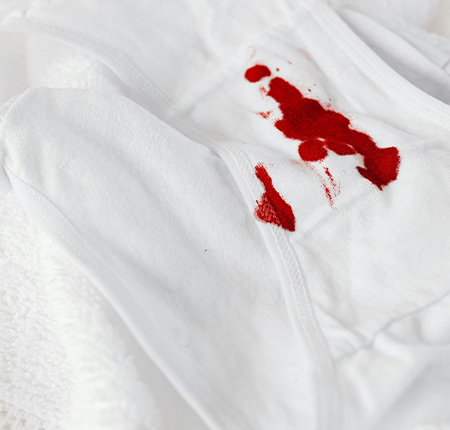
When does the first menstruation occur?
There is no universal answer to this question. Menstruation begins differently for each woman, depending on the pace of development of her own body during puberty. Menarche can occur at any time during adolescence, in principle between the ages of 10 and 16.
According to statistics, by the age of 15, 98% of girls start their period. Most teenage girls get their first period between the ages of 12 and 13, but it can also be normal to start your menstrual cycle at 10 or 14. This is not a rule, and for a girl who is developing rapidly, the first period can start even at 9 years old.
However, your first period won't be a complete surprise. Before and in addition to the first bleeding, there will be a lot of other changes in your body that can indicate that you are about to start your period. We'll tell you about these signals a little below, when we talk about how to tell if your first period is coming soon.
Signs and symptoms of the first menstruation
Menstrual bleeding is the most visible and clear sign of your first period. It's natural and doesn't mean you've hurt yourself or there's a problem, it's just that your body is functioning normally. Here are some other ways menarche manifests itself and what you can expect from your first period:
- Red or brown menstrual blood
- Menstrual blood leakage can stain underwear or clothes.
- Cramps and abdominal, back, and leg pain
- Bloating or constipation
- Breast tenderness
- Mood swings
- Fatigue or insomnia
- Acne or irritated skin
- Food cravings
How long does the first menstruation last?
Just like the onset of menstruation, the duration of the first menstruation is not exact. Menstruation itself, even after it has been regulated, has a different duration for each woman. So even more so, the first menstruation will have a different duration for each girl.
Menarche usually doesn't last very long. It can take a few months for your body to establish its natural menstrual cycle rhythm and for your periods to adjust in length and frequency. Once they do, your period will last between 2 and 7 days and will come every 23 to 35 days, depending on how long your cycle is.
How much blood is lost during the first menstruation?
You don't lose a lot of blood during your period, even though it may seem like it. Typically, you lose between 20 ml and 90 ml of blood (the equivalent of about 1-5 tablespoons of liquid) during your entire period. Your pad or tampon will fill up and need to be changed about 3-6 times a day.
We know that you feel like you're bleeding more, especially during your first period. But in reality, menstrual blood also contains a mixture of uterine tissue and mucus, which increases its volume.
What is the menstrual cycle and how long does it last?
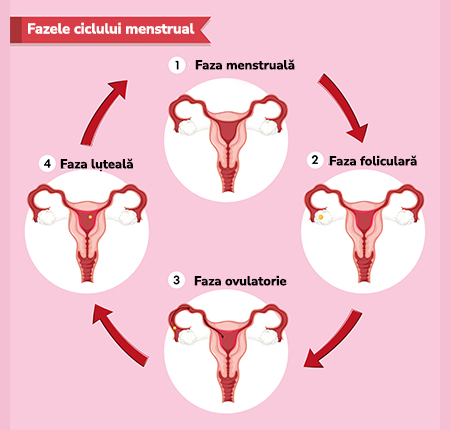
The menstrual cycle is a natural process in every woman's life, which is influenced by the hormonal fluctuations that occur each month. Menstruation is just one of the 4 phases of the menstrual cycle, and it is the most visible because it manifests itself through blood loss.
Women have a menstrual cycle every month throughout their reproductive life, which begins with the first menstruation and ends with menopause. The cycle stops only during pregnancy (or in the case of conditions that have effects on the hormonal level).
The length of a menstrual cycle is different for each woman. Normally, it repeats itself every month, lasting approximately 21 to 35 days, depending on how long each phase lasts. There are four phases of the menstrual cycle, namely:
- Follicular (pre-ovulatory) phase : This is the longest phase of the cycle, when the body stimulates the production of follicles on the surface of an ovary, one of which will later mature into an egg. It is also during this phase that estrogen levels rise and the endometrium (the inner tissue of the uterus) begins to thicken.
- Ovulatory phase (ovulation) : the egg is ready to be released and, if it is not fertilized (if it does not unite with a sperm to form an embryo and begin a pregnancy), it will disintegrate within the next 24-48 hours.
- Luteal phase (post-ovulatory) : The thickened endometrial tissue is now ready to support a pregnancy if fertilization has occurred during the ovulatory phase. If you are not pregnant, this tissue will be shed during menstruation.
- Menstruation : in the absence of pregnancy, your period comes and the uterine lining is eliminated through the vagina in the form of menstrual blood, after which the cycle resumes starting with a new follicular phase.
This is, in a nutshell, the process by which your body prepares for a possible pregnancy each month, and which we call the menstrual cycle. It is a normal but complex process, and involves a lot of other hormonal changes. If you want to learn more about menstruation and the phases of the menstrual cycle, read EVERYTHING you need to know about menstruation on our blog.
What is the average age when the first menstruation occurs?
It is impossible to estimate the exact age at which menstruation should occur, as the average age has decreased over generations.
Our grandmothers and great-grandmothers started their periods at an average age of 14-18, but this has been decreasing over time.
Today, according to statistics, the average age of the onset of menstruation seems to have stabilized at somewhere around 12-13 years. But again, this is not a rule. Each body has its own rhythm.
How can you tell if your first period is coming soon?
Menarche is closely related to puberty, and puberty manifests itself in a variety of other ways. These can be excellent indicators that you are about to start menstruating. Some of the clearest signs that your menstrual cycle is coming soon include:
- Breast development : menarche occurs approximately 2-3 years after the breasts begin to grow.
- Appearance of pubic and axillary hair : menstruation occurs approximately 1 year after hair growth in the intimate area and underarms.
- Vaginal discharge : is a viscous, clear fluid that you may notice on your underwear 6-12 months before your period starts. Its role is to clean and lubricate your vagina.
- Premenstrual syndrome (PMS) : occurs about a week before your period starts and can include headaches, fatigue, abdominal cramps, breast tenderness, and mood swings. Not all girls get PMS, and symptoms can change from month to month before your period.
- Acne : The appearance of pimples is an early sign that puberty has begun, and that menstruation will soon begin. You may also get pimples, especially a few days before your period starts.
First menstruation - what sanitary protection should you choose?
Menstrual care is strictly a matter of personal preference. Contrary to old beliefs, you can use any type of protection you want from your first period, from pads to tampons.
The priorities are to feel protected, to capture menstrual blood to maintain proper hygiene, and to be comfortable for you. And most importantly, to choose a healthy menstrual product, free of toxic chemicals, that doesn't affect your vaginal pH and doesn't irritate your skin.
First period kit
If you've noticed that your body is already giving you signals that you'll soon start your menstrual cycle, you can prepare yourself now with a first period kit. You'll feel much more at ease and your first experience will be much more enjoyable when you have everything you need with you to avoid any unpleasant surprises.
So, even from puberty, you can have a first menstruation kit with you that includes:
1. Intimate napkins : vaginal discharge, which I told you about before your first period, can give you the uncomfortable feeling that you are not clean. Likewise, the first menstrual bleeding can give you the impression that even though you have wiped yourself, you are not clean and you need a shower. And since it is very possible that menarche does not happen at home, but at school or on a trip, intimate napkins are a quick and handy solution to always be fresh and to quickly refresh your vulva.
That's why at Enroush we've created hypoallergenic, pH-neutral, chamomile and prebiotic-infused intimate wipes . They can give you the comfort of feeling clean while protecting your intimate flora, removing bacteria and fighting infections.
2. Menstrual patches
Menstruation can be painful, and as long as it's not too heavy, it's normal. But that doesn't mean you have to suffer. Abdominal pain is always unpleasant, but especially during your first period, which can already be an overwhelming change.
You can get rid of these cramps naturally, without pills, by using Enroush menstrual patches . They are made with 100% natural ingredients and heat up in just 10 minutes to relieve pain for up to 8 hours.
3. A mini purse
Everything is easier when you have everything at hand and can quickly find exactly what you need. That's why a mini-kit that can hold your first menstrual pad or tampon, as well as your sanitary napkins and menstrual patches, will be very useful.
That's why Enroush's Self-Love mini bag is super spacious, so you can fit all your products for a day of your period in it. Plus, it's ultra-portable, so it even fits in your pocket, and it has a sleek powder pink design so you can take it with you everywhere without feeling like you need to hide your products.
Absorbents for the first menstruation
Pads are often the most convenient choice for your first period. Not because they are better than tampons, but simply because they are easier to use, and you can wear them even at night. You just stick them on your underwear, and you are protected from leaks and stains. Pads are disposable, which means you throw them away after one use.
It's also important to look at the ingredients the pad is made of. Conventional pads can contain plastic, chemical bleaches, and allergen-laden fragrances that can irritate the skin and cause itching, stinging, or bumps in the intimate area.
We recommend choosing 100% organic pads from the start, like those from Enroush. They contain 100% organic cotton in the top layer and 100% natural fibers in the bottom layer. Nothing toxic, just pure ingredients that let the skin breathe, are soft to the touch and have super absorption.
Tampons (internal absorbents) at the first menstruation
To answer your question before you ask: yes, you can use tampons even from your first period! There's nothing wrong or dangerous about it as long as you choose a tampon with ingredients that are 100% safe for your vagina and use it correctly. It's just a form of menstrual care, just like pads.
For your first period, when your bleeding is still light, you can choose 100% organic mini tampons , which are the smallest size. It is very important to pay attention to the ingredients, as they will end up in your vagina. Enroush tampons are made with 100% organic cotton and nothing else, which means they are hypoallergenic and safe for your body.
The advantage of tampons is that you can wear them even on a day at the beach, as they are not visible through underwear. However, you need to be even more careful when using them:
- Hand washing is mandatory every time before and after inserting or removing a tampon.
- You shouldn't feel the tampon if you've inserted it correctly - especially an Enroush tampon, which is super flexible and comfortable.
- Make sure you don't wear a tampon for more than 6-8 hours to avoid toxic shock syndrome. This is also why it's not recommended to use tampons at night.
- Like pads, tampons are disposable menstrual products and are thrown away after use.
Menstrual cups and menstrual underwear
Two other well-known methods of menstrual protection are the menstrual cup and menstrual underwear.
A menstrual cup is a device that is inserted into the vagina and collects menstrual blood, positioning itself as a cap to prevent leakage. Unlike pads and tampons, the cup does not absorb, but rather collects the fluid that you will later throw away. The cup is reusable, meaning that every time you take it out, you will wash it and you can use it again.
Menstrual underwear is also reusable, meaning you can wash it and reuse it. Typically, this type of underwear is made of materials that absorb menstrual blood and prevent it from staining your clothes, without the need for a pad or tampon.
How to tell someone about your first period
It's normal to want to talk about your first period and have questions. You don't have to feel embarrassed about it. The menstrual cycle is natural, all women have periods, and it's normal to talk openly about it.
So you can talk to your mom, older sister, friends, or even your dad without any problems, because both women and men know that menstruation is a natural function. Find a time and place where you can sit quietly and talk comfortably, and discuss any questions or concerns you have.
How to manage your first period at school
You can't control when your first period (or any future periods) comes. So there's a chance it could come while you're at school.
No problem! If you don't have a menstrual kit ready and don't have a pad or tampon handy, don't hesitate to ask your classmates, a teacher, or a nurse. There should always be menstrual products in the school office for such situations. There's nothing unusual or shameful about it, and everyone knows it.
We know that one of the biggest fears when you're at school is not to get dirty: your clothes, your seat, etc. That's why Enroush pads and tampons are super-absorbent to prevent any kind of accident. But in the end, even if it happens, it's no big deal! It's just menstrual blood and you don't have to be ashamed. And if you're really worried about this aspect, you can carry a change of clothes in your backpack, as a safety measure just in case.
Myths about the first menstruation
Menstruation is one of the phenomena about which the most myths and the most unexpected claims have been made. All of this contributes to the misinformation and fear surrounding menstruation, and has no scientific basis.
Below we talk about some of the most commonly heard myths about the first period that you shouldn't believe.
1. Premenstrual syndrome is not real
Premenstrual syndrome is very real, and it's not an excuse or a whim of women. Your body experiences hormonal fluctuations before each period, changes that can cause symptoms like abdominal pain, irritability, mood swings, migraines, etc. These symptoms usually start 5-7 days before and improve during or after your period.
2. I shouldn't swim during my period.
There is no reason to avoid swimming during your period. Whether you are on your period or not, water does not enter your vagina and it is perfectly safe to continue swimming. You cannot count on a pad to protect you as it will immediately fill with water and will no longer be able to absorb menstrual blood, but you can use a tampon with confidence.
3. I shouldn't bathe during my period.
There is a myth that women are not allowed to bathe or sit in hot water during menstruation, lest they bleed. Again, this is a myth. Water does not enter the vagina, and there is no reason to avoid bathing.
On the contrary, baths in warm water can relax your muscles and help relieve menstrual cramps.
4. I shouldn't go to physical education class during my period.
Quite the opposite! Experts and studies encourage physical activity during menstruation and confirm the benefits of exercise even during menstruation. Blood circulation is improved when you are in motion, which can help relieve menstrual pain.
Not only is it recommended to participate, but it's good to be active even if you don't have a PE class on those days. Walks, easy runs, yoga, you have plenty of options!
5. Menstruation should last exactly one week.
There is no rule and every woman's body is different. Menstruation can last anywhere from 2 to 7 days and be perfectly normal. Especially in the first few months, when your menstrual cycle is still regulating itself, it is normal for the length of your bleeding to vary.
Frequently asked questions about the first period
Above we told you what the most common myths about menarche are, now we'll tell you what the most frequently asked questions about this topic are. Quickly find out the answers to questions you've probably asked yourself about your first period.
What causes the first menstruation?
During puberty, your body begins to prepare to support a pregnancy. Your breasts develop, pubic and armpit hair appears, and vaginal discharge appears. Continuing this natural development, hormonal fluctuations will also begin that will trigger your menstrual cycle and the first ovulation. With your first period, your body signals to you that it is ready to conceive a child.
How do I know when my next period is coming?
It is difficult to predict when your next period will come, especially in the early months. The menstrual cycle is irregular at first, and it can take even a few years for it to settle down.
A menstrual cycle generally lasts between 21 and 35 days. You can use a diary or a tracking app on your phone to write down the first day of each period. This way you can keep track of it to find a pattern and estimate when your next period will start.
Is it normal to have pain during my first period?
It is normal to feel some discomfort in your abdominal area during this time of the month, and the pain may be worse during your first period. The most common symptoms are abdominal cramps and back pain. This pain is normal as long as it does not prevent you from carrying out your daily activities.
If your menstrual pain is so intense that you can't walk, have to miss school, or can't continue your normal life, it's NOT normal! A consultation with your gynecologist is recommended to determine the causes and find the right treatment.
Can I continue to exercise after my first period?
Yes, you can continue to exercise after and during your first and any period. Physical activity is beneficial for your body and can help relieve menstrual cramps.
Do I need to visit a doctor after my first period?
Menstruation is normal and, if there are no complications, the first visit to the gynecologist is recommended after starting sexual life. But if your periods are irregular, they are missing for more than 3 months, the bleeding is very heavy or you have very strong menstrual pain, then yes, you should consult a gynecologist. You can also go to your gynecologist for guidance and recommendations if you have questions and want the advice of a specialist.


and happily breaking taboos!


