
The Hymen - What Does It Look Like & Where Is It Located? EVERYTHING You Need to Know
An epicenter of myths, that's how we could describe the topic we're addressing today. The hymen has long been considered a criterion for determining virginity and a taboo subject built on erroneous information. It's time to understand our own bodies better, in order to protect our intimate health.
It all starts with the anatomy of the vulva. The female genitalia includes both elements that we can see (externally) and those that we can't see (internally). Together, they work as a whole and ensure the normal, healthy functioning of your body.
DON'T FORGET!
The vulva is the outer part of the genital system and includes all the external organs and structures. On the other hand, the vagina is part of the internal sexual organs and connects the vulva to the uterus.
The story of your intimate area continues in our article where you can learn everything you need to know about your vagina from A to Z. From anatomy to intimate health, to tips & tricks for a happy body, you'll find out everything you should have learned in school.
Among the external components we see is the hymen, the controversial part of your vagina. It's time to really explore it.
What is the hymen?
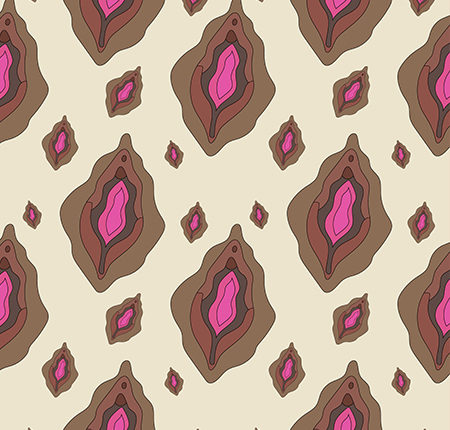
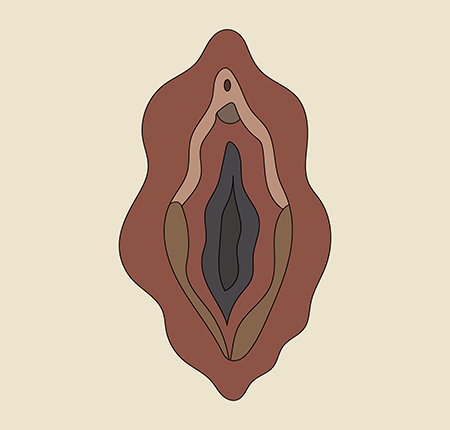
First of all, the hymen is not a membrane. It is actually a thin, supple layer of tissue located inside the opening of the vagina, near its external orifice. There is a lot of confusion about its appearance, as many people believe that the hymen completely covers the entrance to the vagina, when in reality it is not.
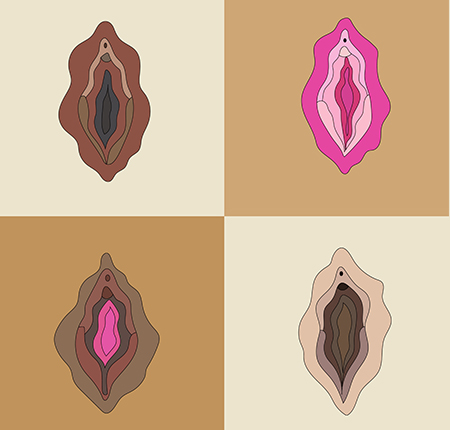
The hymen is never completely closed. Most hymens have one or more openings that allow menstrual blood to drain from the vagina. Some people are born with a fibrous hymen, while others are born without a hymen, which is a congenital malformation. In addition, no two hymens are the same; they vary in shape and size.
What does the hymen do?
The physiological role of the hymen is still unknown. Although it does not seem to have a specific function, experts say that the hymen is a remnant of the development of the vagina, which prevents bacteria and dirt from entering the vagina. In children, the hymen may have a role in preventing objects from being pushed into the vagina.
Location - Where is the hymen located?
The hymen surrounds or partially covers the entrance to the vagina. Of course, it can be positioned differently around the vaginal opening and can come in many shapes and sizes.
Can the hymen be seen?
Although the hymen is theoretically visible, in practice the position you need to be in to see it is quite difficult. If you position yourself in front of a mirror with your legs apart, there is a good chance you will be able to see it.
Hymen & Menstruation - Is There a Connection?
Blood during menstruation leaves the body through the opening in the hymen. There is always a hole, smaller or larger, even in girls who have never had sexual intercourse. This dispels the myth that the hymen completely covers the entrance to the vagina.
And to bust another myth…did you know that very strong menstrual pain and heavy menstrual bleeding can be caused by the intimate hygiene products you use? It seems that discomfort has become normal over time, but we at ENROUSH know that it doesn't have to be that way. Out of love and care for women, we created 100% organic absorbents made of natural cotton, which not only provide you with the comfort you need, but also do not put you at risk when it comes to your health. We have full trust in Mother Nature and do not add chemicals, chlorine, dioxins or synthetic fibers, plastic, because your well-being lies in simplicity. ENROUSH is about and for you.

What does the hymen look like? Types of hymen:
Your entire vulva is unique and you can't compare it to another person's, but you can step by step understand your body better and make the right choices to take care of it.
Knowing what is typical for you is not easy, and the truth is that the most important changes begin with menstruation. It is very important to remember that there is no standard that you have to follow, and the hymen is no exception. Your hymen is unique and as long as you are happy and healthy, you have nothing to worry about.
Since there is no single type of hymen, we will divide them into categories.
Annular or semi-lunar hymen
The annular or crescent-shaped hymen is considered the most common form of hymen. It surrounds your vaginal opening like a ring or donut, and then as it breaks or stretches, it looks more like a crescent. This is where menstrual flow is allowed to pass through.
If you have a ring or crescent-shaped hymen, it might look slightly different, depending on how the hymen has stretched or torn.
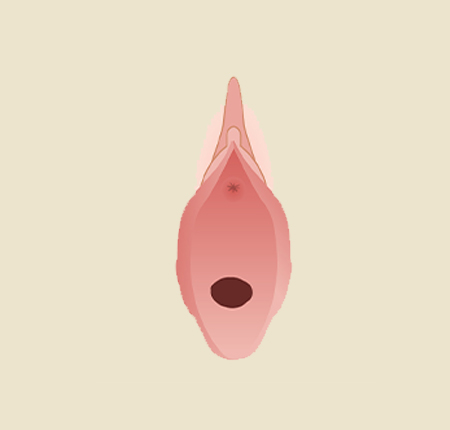
Denticular hymen
This type of hymen presents several tooth-like formations surrounding the vaginal opening. Although it is not very common, it does not indicate any health problems.
Non-perforated/imperforate hymen
Imperforate hymens are very rare. It is estimated that between 1 in 1,000 people and 1 in 10,000 people have a hymen like this.
This is the type of hymen that completely covers the opening of the vagina. This prevents menstrual blood from flowing out of the vagina and can cause pain in the abdomen and pelvis as the blood gets trapped there.
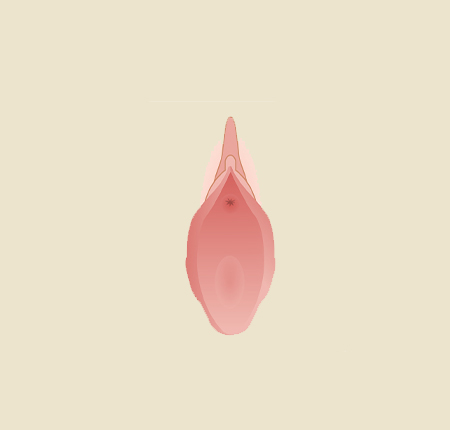
Imperforate hymen can be diagnosed at birth, but in many cases the diagnosis is not made until puberty. Treatment consists of a minor surgical procedure to remove excess tissue and create an opening to allow menstrual flow to pass.
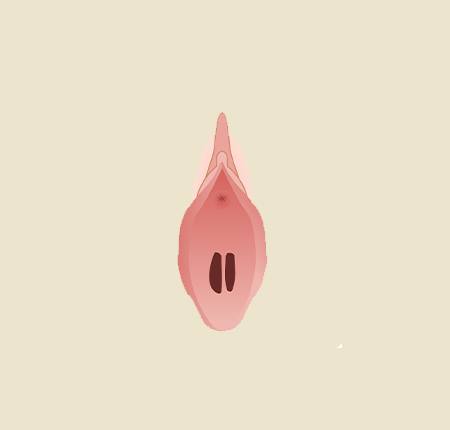
Septate hymen
Like an imperforate hymen, a septate hymen falls into the “rare” category. The thin hymenal membrane has an extra strip of tissue in the middle, causing two small vaginal openings instead of one. People with this type of hymen may have trouble inserting or removing a tampon. Penetrative sex can tear this extra tissue.
Treatment consists of minor surgery to remove the extra band of tissue and create a normal-sized vaginal opening.
Microperforated hymen
This type of hymen covers almost the entire opening of the vagina, except for a small opening. Because it is so small, menstrual fluid can get stuck in the vagina or only come out in small amounts. It may also be difficult and painful to insert a tampon or other items.
As with imperforate hymen, treatment consists of removing excess tissue and more clearly defining the space not covered by the hymen.
Cybriform hymen
The cybriform hymen has lots of small holes in it, which can mean it's difficult to insert a tampon. It can also mean it takes longer for menstrual blood to leave the body, leading to longer periods. 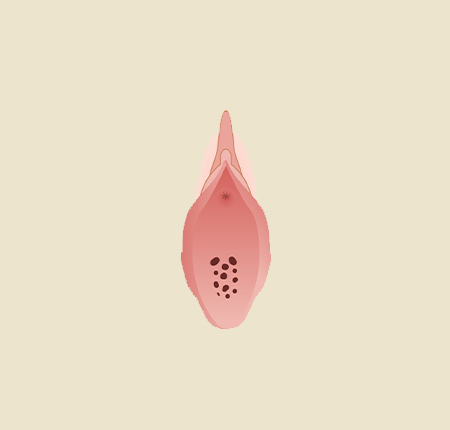
Elastic hymen - What does it mean?
The hymen varies from woman to woman and depending on the stages of life. Some women are born without a hymen, while others feel as if they don't have one because it is so elastic that it stretches without bleeding.
The hymen usually breaks during the first sexual intercourse, even if you have an elastic hymen, but there is also the possibility that it may not break.
Does the elastic hymen have any advantages or disadvantages?
Although we cannot say that one hymen is "better" or more "advantageous" than another, it is recognized that an elastic hymen can mean less pain during the first sexual intercourse and even the absence of bleeding.
Ruptured hymen - What does this mean?
The hymen has been considered an indicator of female virginity since ancient times. The truth is that the hymen can be torn for reasons that are not directly related to sexual intercourse.
A hymen rupture, regardless of the cause, may be accompanied by minor bleeding or decreased pain sensation. Both consequences are normal and usually disappear after a short time.
What does a torn hymen look like?
A torn hymen does not look much different from an “intact” one and its rupture is not a cause for concern.
How can the hymen be torn?
The hymen can give way in cases such as:
- accident or blow;
- when the body is overworked (in the case of performance athletes);
- in the case of surgical interventions by inserting medical instruments into the vagina;
- after masturbation;
- in some cases without apparent causes.
Very rarely, a hymen can tear due to the use of an internal tampon. They do not pose a risk to your health if:
- Choose the right size for you.
- You use 100% organic tampons
- Change your internal tampon every few hours.
If you know how important it is for your intimate area to come into contact with only organic, 100% natural products, we invite you to the world of ENROUSH where the focus is on your health and safety. We didn't want to feel chemicals, plastic and synthetic fibers on our skin anymore, so we created 100% organic cotton tampons . Not only do they provide you with the comfort you need every day during your period, but they also prove to you that nature is the answer when it comes to caring for us, women! We deserve the best and nothing less. 
Our clients agree with us:
My gynecologist recommended that I use organic tampons and after a long search I found ENROUSH. These are the best internal tampons I have ever tried. The fact that they are free of all sorts of chemicals or fragrance makes them easy to wear, without causing any irritation or breakouts on my skin, so I really recommend them from the bottom of my heart.
Bianca
Can a torn hymen be repaired?
Naturally, once the hymen is torn, it cannot be repaired. However, there is a surgical procedure called hymenoplasty that allows it to be repaired.
What is the connection between losing virginity & breaking the hymen?
Hymens come in a variety of shapes and sizes, so it's important to understand that they are not a relevant indicator of sexual activity. Their initial shape can be altered by masturbation, sex toys, or even when they are completely intact. This means that the hymen does not necessarily have to be pierced by sexual intercourse, which is why not all women will experience pain or bleeding during their first sexual experience.
Studies say that only 50% of women will bleed during their first sexual intercourse.
So, the mentality that a woman must bleed during her first sexual experience remains a myth propagated by cultures where there was a custom or ritual for the bed linen to be shown publicly after the couple had spent their first night together. The blood meant that the woman was pure and that she had not had sexual relations before marriage. The reality is different and we now know that virginity is just... a Unicorn.
Ultimately, it's up to you to decide what "being a virgin" means, and it's certainly not defined by a small piece of tissue in your vagina that has, or hasn't, been torn.
Hymenoplasty - What does it involve?
Except in societies and cultures where a woman's social status depended on the existence of a hymen (a sign of purity), its value is quite insignificant. Even its role remains vague. However, plastic surgeons have developed a procedure called hymenoplasty, through which the hymen is reconstructed.
Although such a procedure cannot psychologically restore "virgin" status, the operation can be beneficial to women whose lives may be at risk in its absence.
There are two types of hymenoplasty:
- simple hymenoplasty - hymen reconstruction
- hymenoplasty by hymen implant
In some countries, hymenoplasty is considered a form of female genital mutilation and is even outlawed to protect young women.
How does the hymen change throughout life?
When you're born, your doctor can check your hymen to see if you might need surgery to remove the tissue. However, at such a young age, it's not always easy to tell the shape of your hymen. Diagnosis may come much later, during puberty, once your period has started and you've struggled to insert a tampon, or you may notice that your bleeding is particularly long and painful.
However, most women won't even know their hymen is there. They won't even feel it changing, even if it does.
- The hymen at birth: When you are born, the hymen may appear thicker and fleshier, stiffer, and more sensitive. Once you start puberty, your ovaries begin to produce the hormone estrogen, which can make the hymen tissue more elastic.
- Hymen rupture and loss of virginity: It is true that for some, the hymen can tear or stretch when they have penetrative sex, but this does not apply to everyone.
- Your hymen during labor and after vaginal birth: As with puberty, as estrogen levels increase during pregnancy, the tissue that makes up the hymen can become even more elastic to allow for delivery. Your hymen can stretch and tear more during labor as the baby emerges from the vagina.
Frequently asked questions
Are there any unanswered questions? Maybe you can find the information you were looking for here.
When do you know your hymen has broken?
Think of your hymen as a ring that is stretched and sometimes breaks over time when something rubs against it or enters your vagina. Once it breaks, you may feel a little pain and may experience a brief period of bleeding, but it's also normal to feel nothing. In fact, you may not even notice when your hymen breaks.
Does an intact hymen mean you're a virgin?
From a medical point of view, there is no such thing as an "intact" hymen because there is so much variation in shape, size, and thickness that it is not so easy to determine when it is "intact."
Moreover, the hymen does not determine whether or not you are a virgin, as it can break even at the most normal moments, unrelated to sexual activity (while playing sports, having a Pap smear, masturbating) or even never breaks at all.
How do I know if my hymen is healthy?
There are no indicators that determine whether your hymen is healthy or not, but as it is part of the female reproductive system, if you feel that something is wrong, you should definitely see a gynecologist.


and happily breaking taboos!


